> For the complete documentation index, see [llms.txt](https://docs.digit.org/llms.txt). Markdown versions of documentation pages are available by appending `.md` to page URLs; this page is available as [Markdown](https://docs.digit.org/health/deploy/installation/setup-kibana-dashboard.md).
# Setup Kibana Dashboard
Create and configure health dashboards in Kibana
## Overview
This document outlines the steps required to create and configure health campaign dashboards in a different space within Kibana.
## Pre-requisites
* Knowledge of creating dashboards in Kibana. - [Dashboard and visualisations](https://www.elastic.co/guide/en/kibana/8.11/dashboard.html)
* Transformer and indexer services are up and running to enrich data for KPI creation and push data to Elastic Search.
## Steps
{% stepper %}
{% step %}
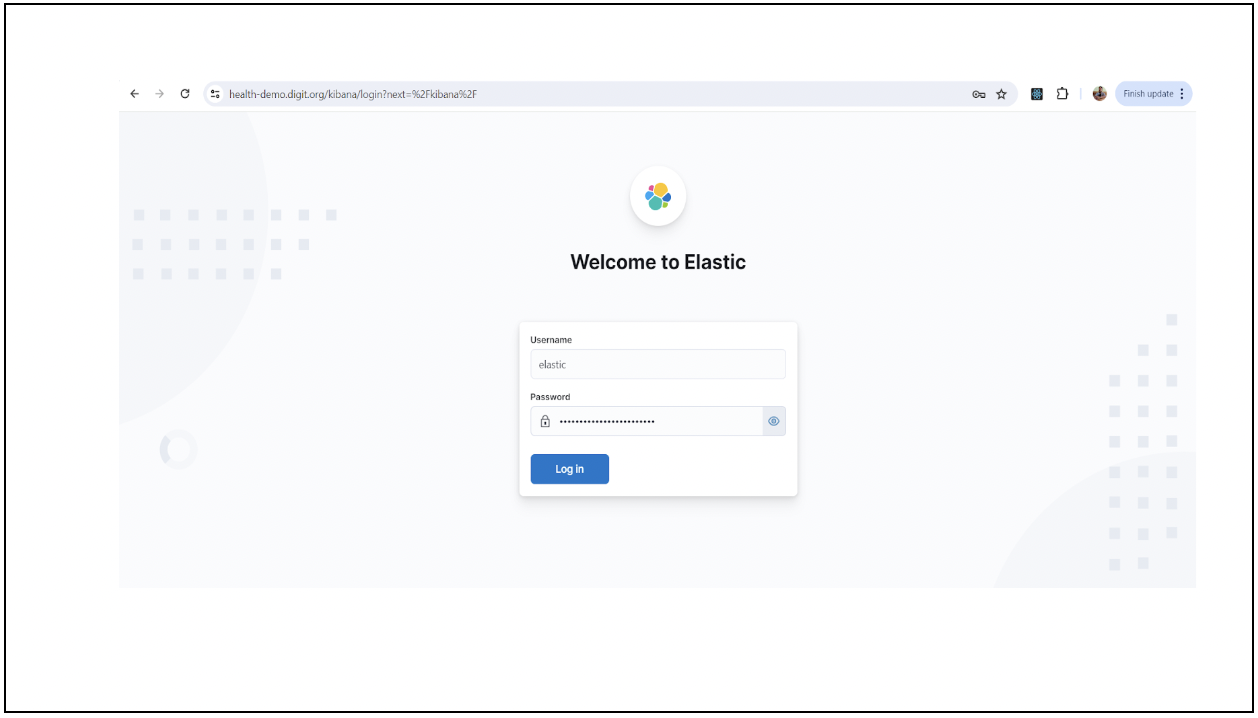
### Access Kibana
* URL: {{HOST NAME}}/kibana
* Replace the {{HOST NAME}} with your domain URL.
{% endstep %}
{% step %}
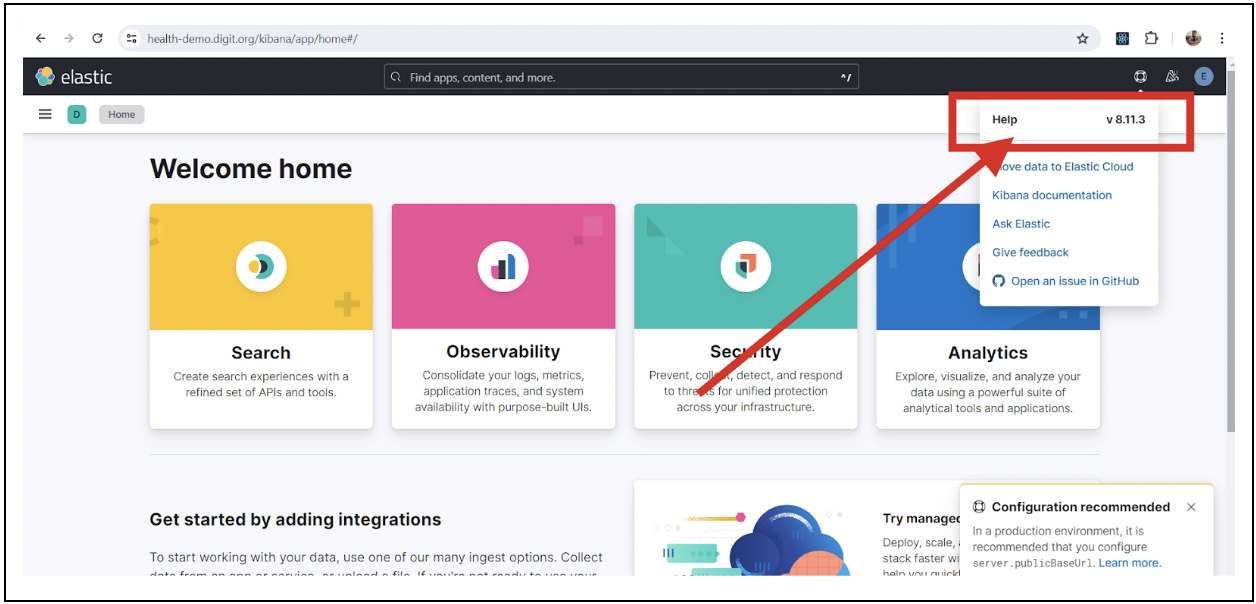
### Verify installation & service setup
* Check the Kibana version through the UI in the Help section.
{% endstep %}
{% step %}
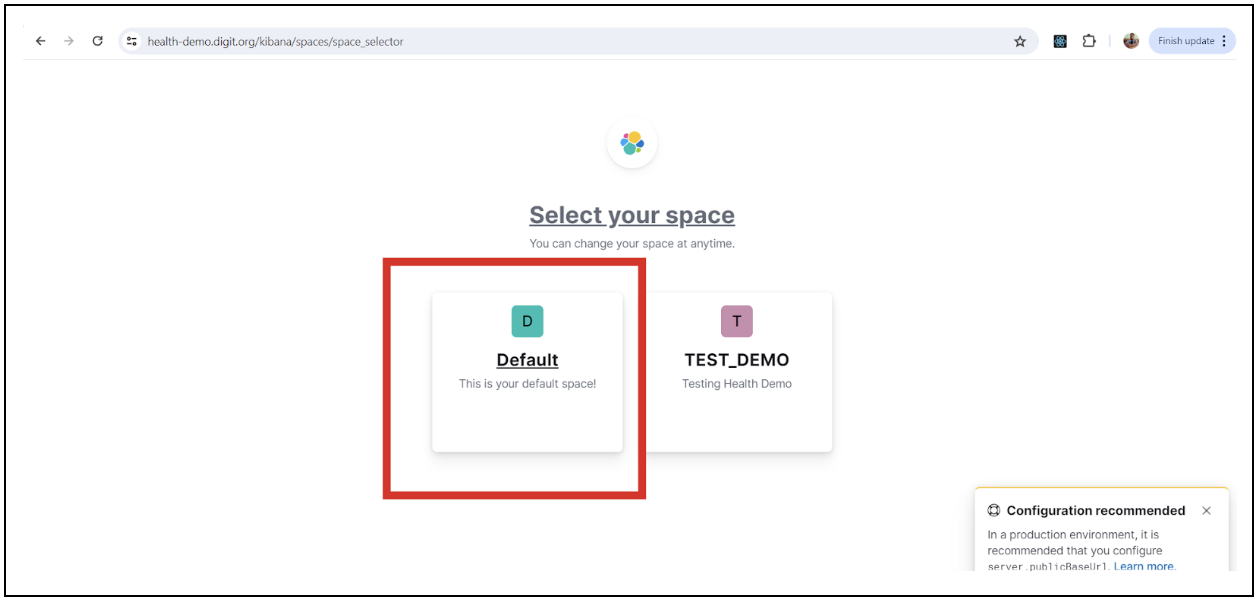
### Create or select a space
* By default, users will have access to the default space.
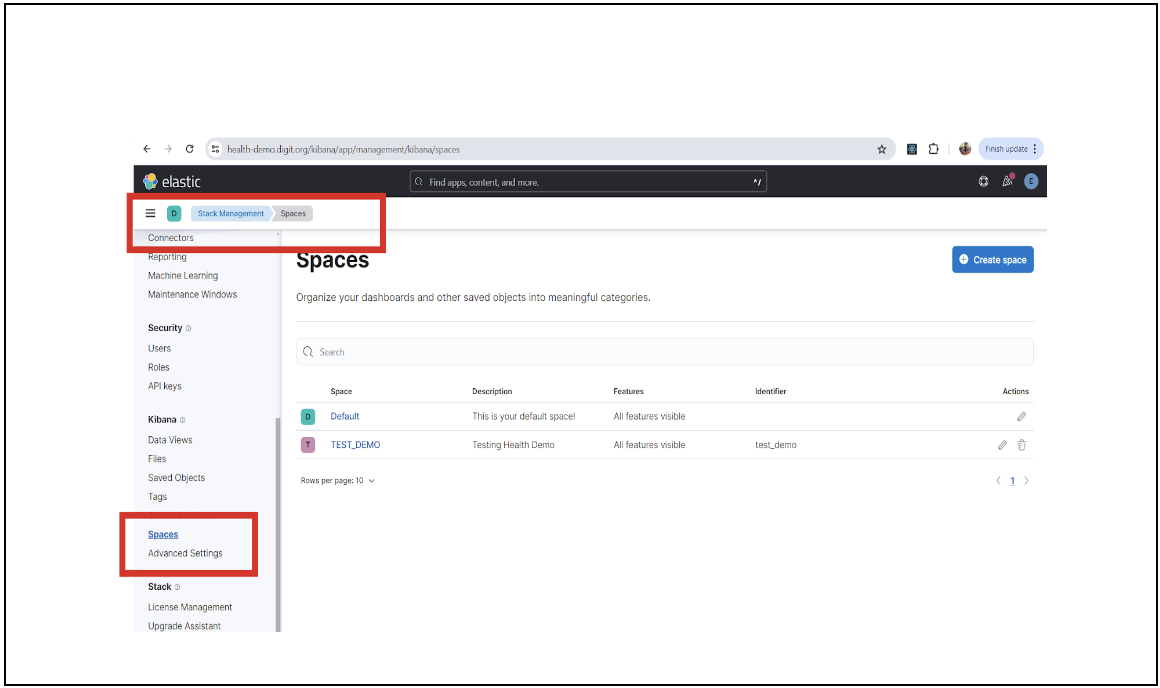
* To create a new space or edit, open the main menu, then click Stack Management → Spaces for an overview of your spaces. This view provides actions to create, edit, and delete spaces.
* Switch to or create a new space where the dashboards will be configured.
{% endstep %}
{% step %}
### Visualise data views & dashboards
{% hint style="info" %}
You can import and use the existing data views and dashboards from the product environment. To import existing data views, follow the steps given below.
{% endhint %}
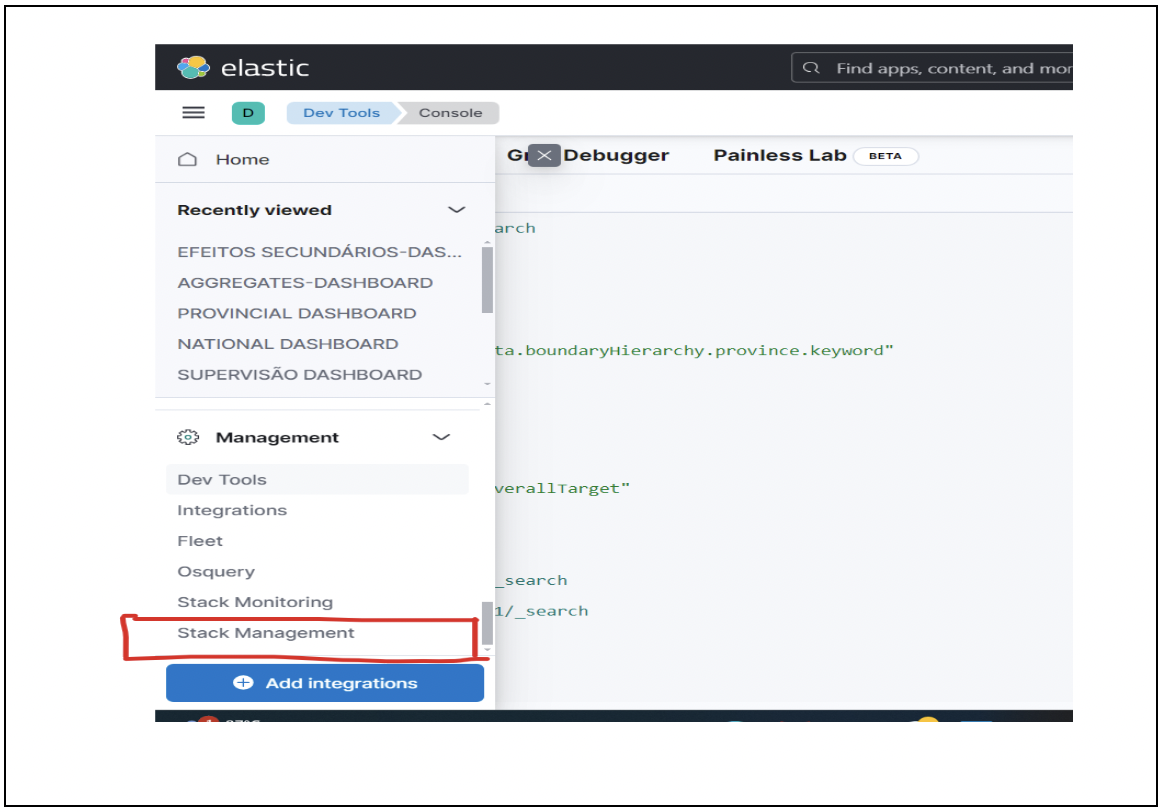
* Navigate to the “Stack Management” in the sidebar.
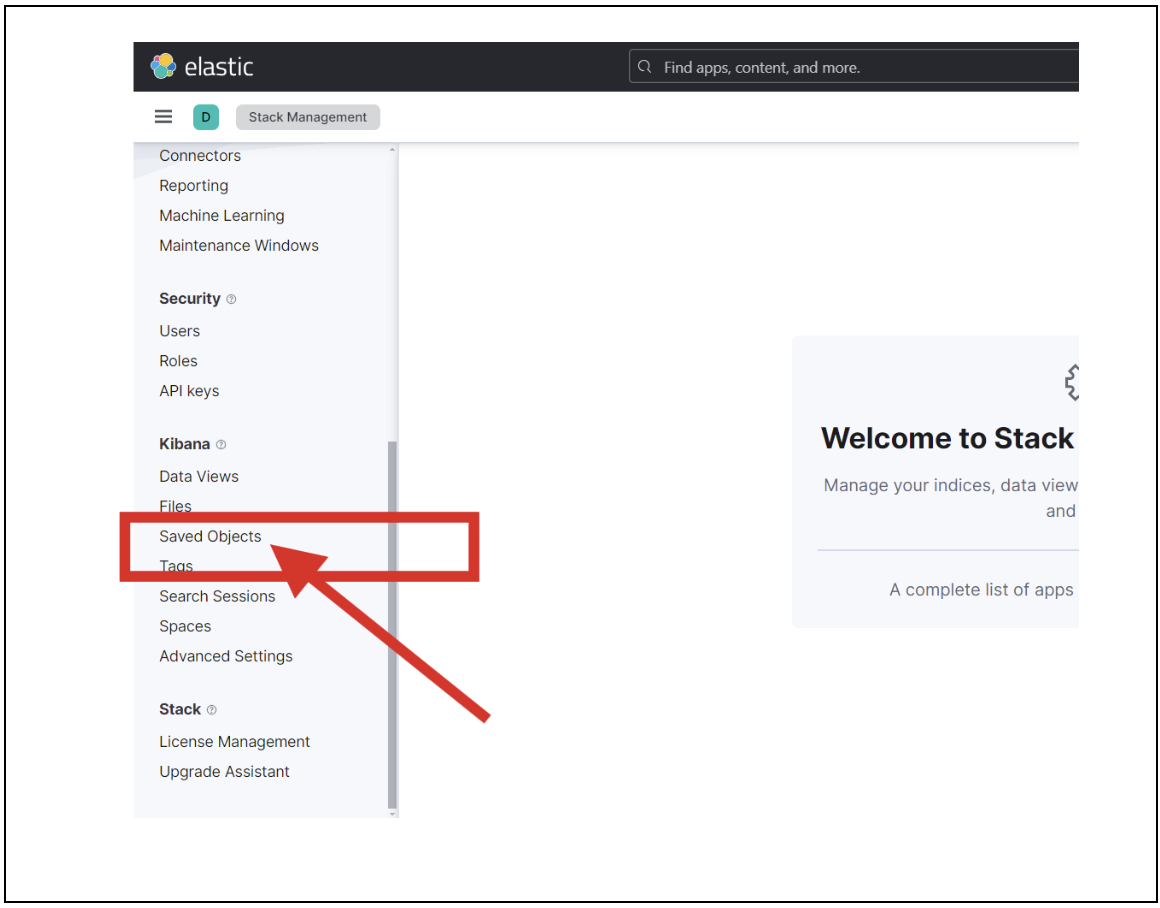
* Click on “Saved Objects” under Kibana.
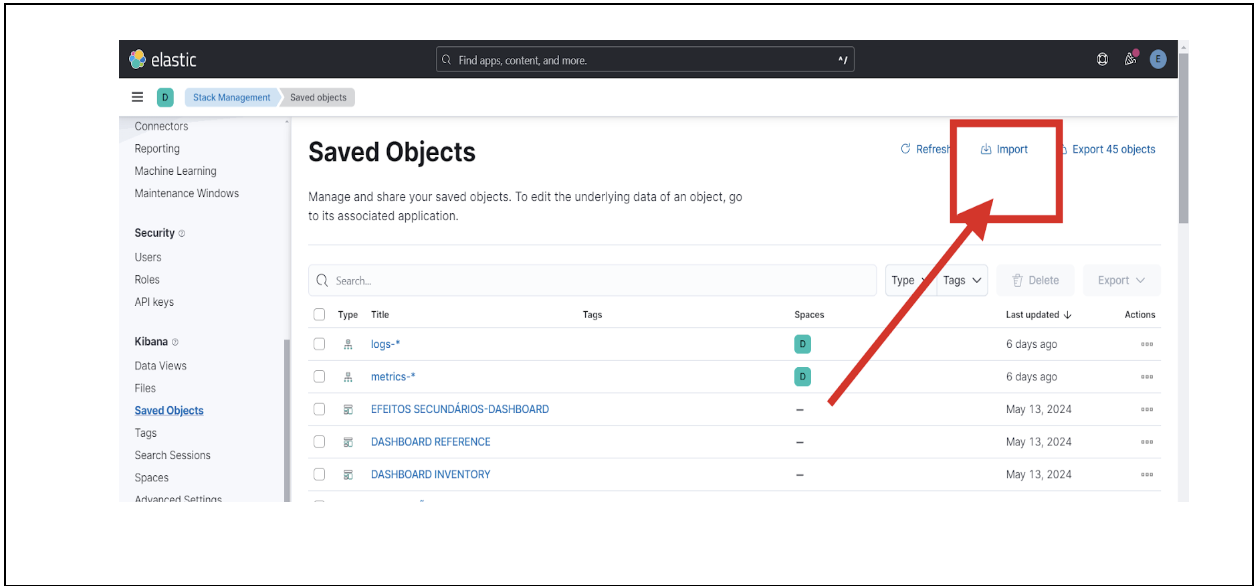
* Import the data views file here. Data views contain the queries and charts needed to fetch data from the indexes. The file to be imported:
{% file src="/files/e7QRb2ZWf4NtreercZdw" %}
* If you need to create your own data views, follow this guide:[ Creating Data Views in Kibana](https://www.elastic.co/guide/en/kibana/current/data-views.html).
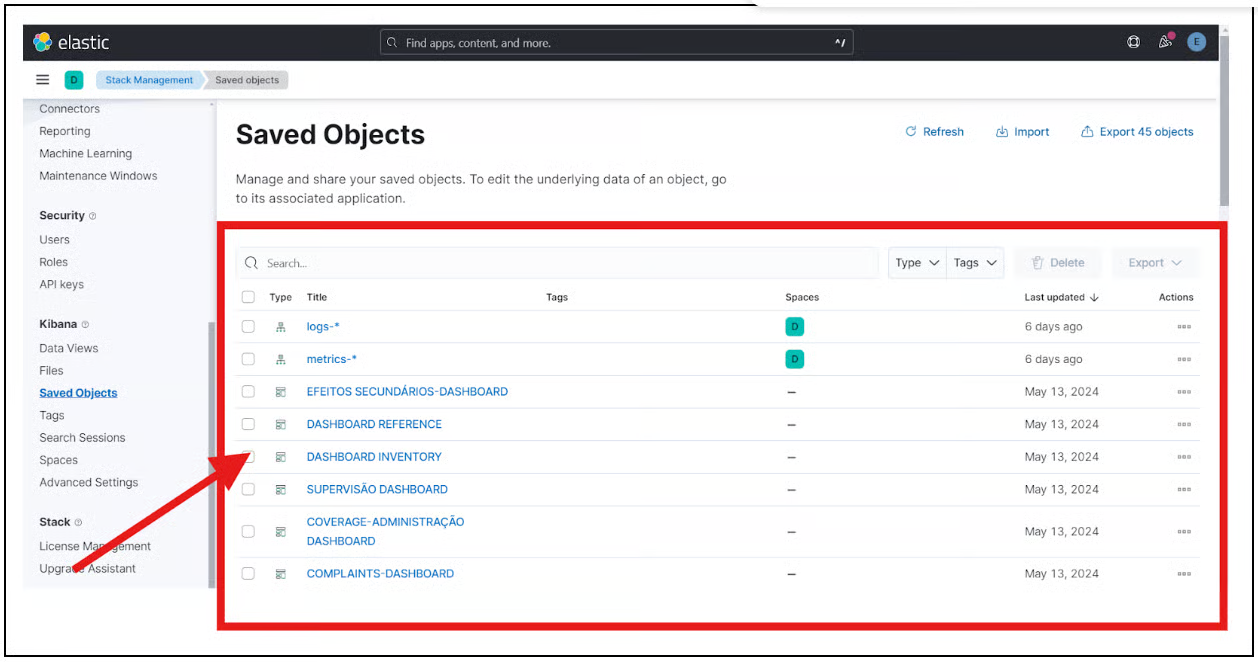
* All dashboards and data views will be imported here and can be viewed under “Saved Objects”.
{% endstep %}
{% endstepper %}
---
# Agent Instructions
This documentation is published with GitBook. GitBook is the documentation platform designed so that both humans and AI agents can read, navigate, and reason over technical content effectively. Learn more at gitbook.com.
## Querying This Documentation
If you need additional information that is not directly available in this page, you can query the documentation by asking a question.
Perform an HTTP GET request on the following URL with the `ask` and `goal` query parameters:
```
GET https://docs.digit.org/health/deploy/installation/setup-kibana-dashboard.md?ask=&goal=
```
`ask` is the immediate question: it should be specific, self-contained, and written in natural language.
`goal` is what the user is ultimately trying to achieve, the reason they need the answer. Sharing it helps GitBook give you a better, more relevant answer. A goal is most helpful when it describes the outcome the user wants rather than restating the question. For example, with `ask=how do I create an API token`, a goal like `automate deployments from our CI pipeline` lets GitBook tailor the answer to that use case.
The response will contain a direct answer to the question and relevant excerpts and sources from the documentation.
Use this mechanism when the answer is not explicitly present in the current page, you need clarification or additional context, or you want to retrieve related documentation sections.