
🌠Stock
Overview
Stock is the supply-chain ledger for a health campaign. Every time a commodity (vaccine, bed net, deworming tablet) moves — received into a warehouse, sent to a facility, handed out to a household, lost, or adjusted — Stock records one row for that movement. It also stores physical-count reconciliations so a facility's book stock can be checked against what's actually on the shelf.
In short: "what did we have, where did it go, and does the count still add up?"
Business Flow
During campaign setup, opening stock is received into central/warehouse facilities.
During the campaign (runtime), field workers and storekeepers record transfers (warehouse → facility → sub-facility) and distributions (facility → beneficiary). Every hand-out of a commodity is a stock OUT transaction.
Periodically, a storekeeper does a physical count and submits a reconciliation so discrepancies (theft, breakage, miscount) surface early.
The numbers feed the dashboards (via the transformer → Elasticsearch) so programme managers can see stock-on-hand and consumption per facility.
Key APIs / Entry Points
Base path /stock/v1 (transactions) and /stock/reconciliation/v1 (counts). Each entity has single + bulk create/update/delete, and a search.
Transaction endpoints record commodity movements. Reconciliation endpoints record physical stock counts.
POST /stock/v1/_create, /bulk/_create
Record a stock movement (single or bulk).
POST /stock/v1/_update, /bulk/_update
Correct a movement.
POST /stock/v1/_delete, /bulk/_delete
Soft-delete a movement.
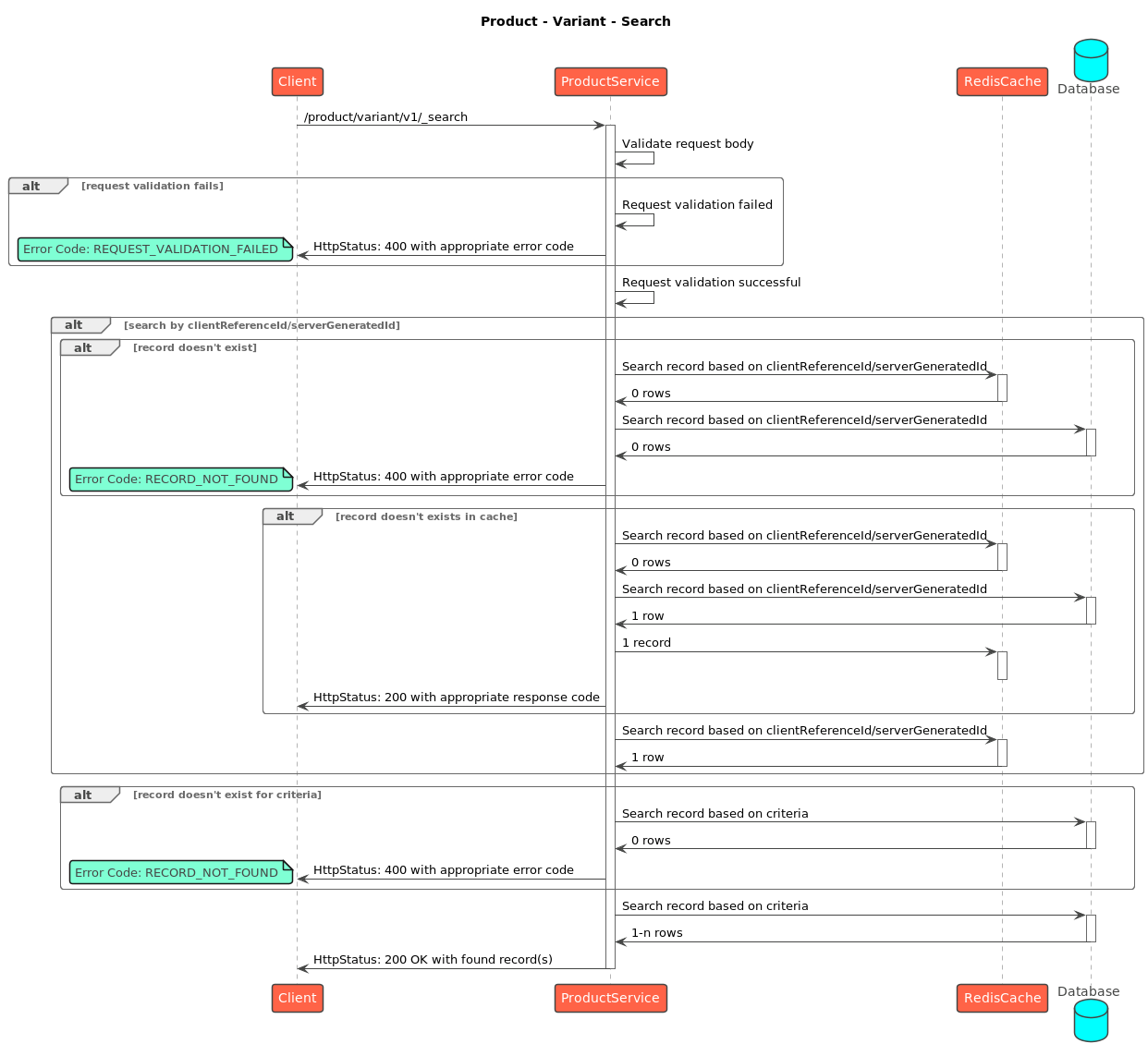
POST /stock/v1/_search
Find movements (by facility, sender/receiver, product variant, campaignNumber, since-time …).
POST /stock/reconciliation/v1/_create … _search
Same shape for physical-count reconciliations.
Kafka entry points (async). Bulk requests land on create-stock-bulk-topic / update-… / delete-… (and the reconciliation equivalents) and are processed by the service's own consumer. Persisted results go out on save-stock-topic / update-stock-topic / delete-stock-topic (+ reconciliation topics) for the persister and transformer.
Swagger contract:

Kafka topics
create-stock-bulk-topic
in
Bulk stock-movement create requests
update-stock-bulk-topic
in
Bulk stock-movement update requests
delete-stock-bulk-topic
in
Bulk stock-movement (soft) delete requests
create-stock-reconciliation-bulk-topic
in
Bulk reconciliation create requests
update-stock-reconciliation-bulk-topic
in
Bulk reconciliation update requests
delete-stock-reconciliation-bulk-topic
in
Bulk reconciliation delete requests
save-stock-topic
out
Persist new stock rows (persister + transformer)
update-stock-topic
out
Persist stock updates
delete-stock-topic
out
Persist stock soft-deletes
save-stock-reconciliation-topic
out
Persist new reconciliations
update-stock-reconciliation-topic
out
Persist reconciliation updates
delete-stock-reconciliation-topic
out
Persist reconciliation deletes
Dependencies
idgen — generates stock record IDs.
facility — validates the facility a movement is for.
product — validates the product variant being moved.
project / project-facility — optional link of a movement to a project's facility.
health-services-common / -models — shared clients, validators, POJOs.
Kafka — async create/update/delete pipeline.
egov-persister (deployed via the
configs/repo) — actually writes the rows to Postgres off thesave-*topics.transformer → Elasticsearch — builds the dashboard read-model from the same topics.
Redis — caching used by the shared repository layer.
Process Flow
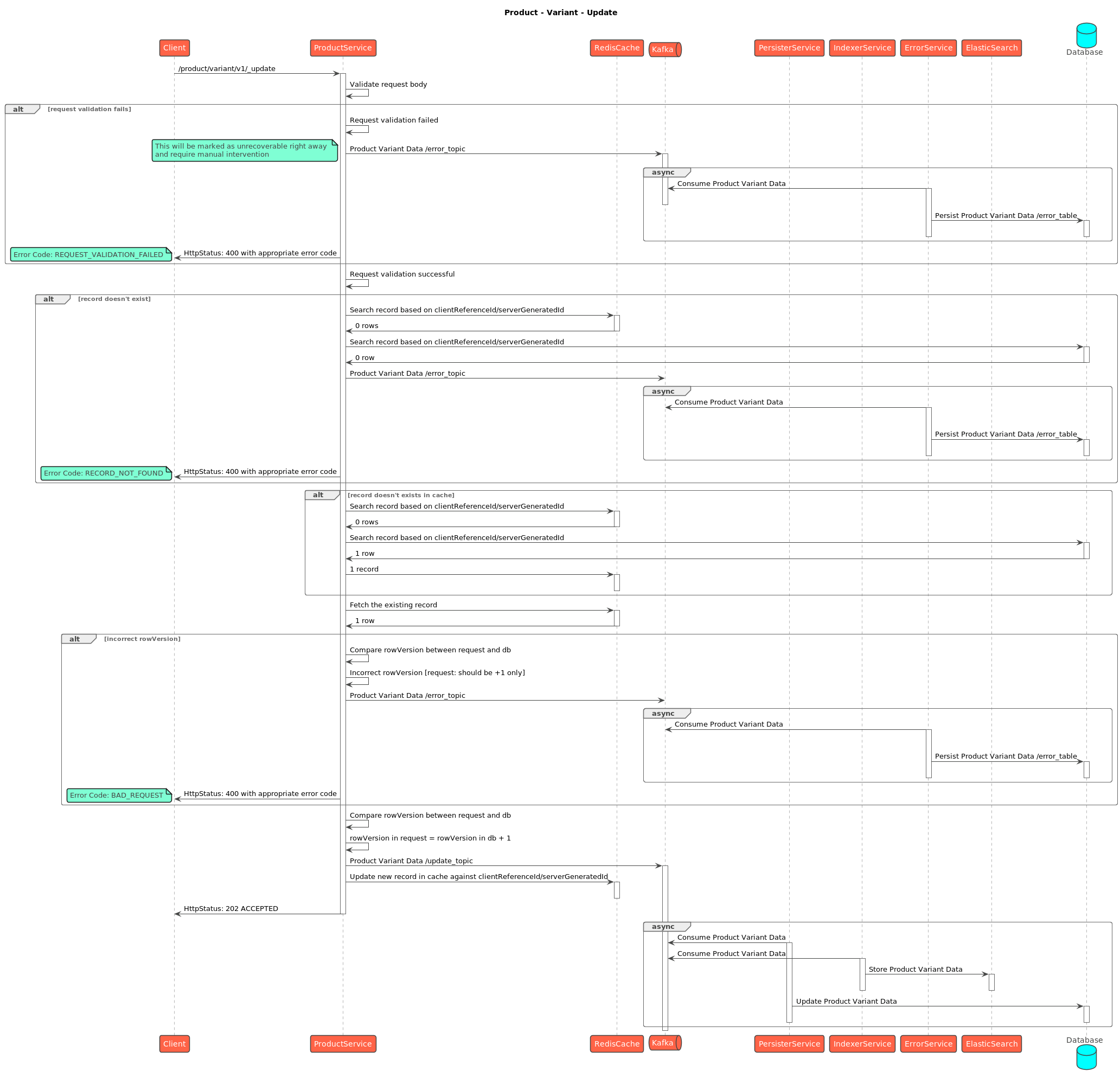
Writes are asynchronous: the API validates, enriches and acknowledges, then a Kafka consumer persists. The service does not write Postgres directly — it emits a save-* event that egov-persister turns into a row, while the transformer indexes the same event into Elasticsearch for dashboards.
Sequence Diagrams
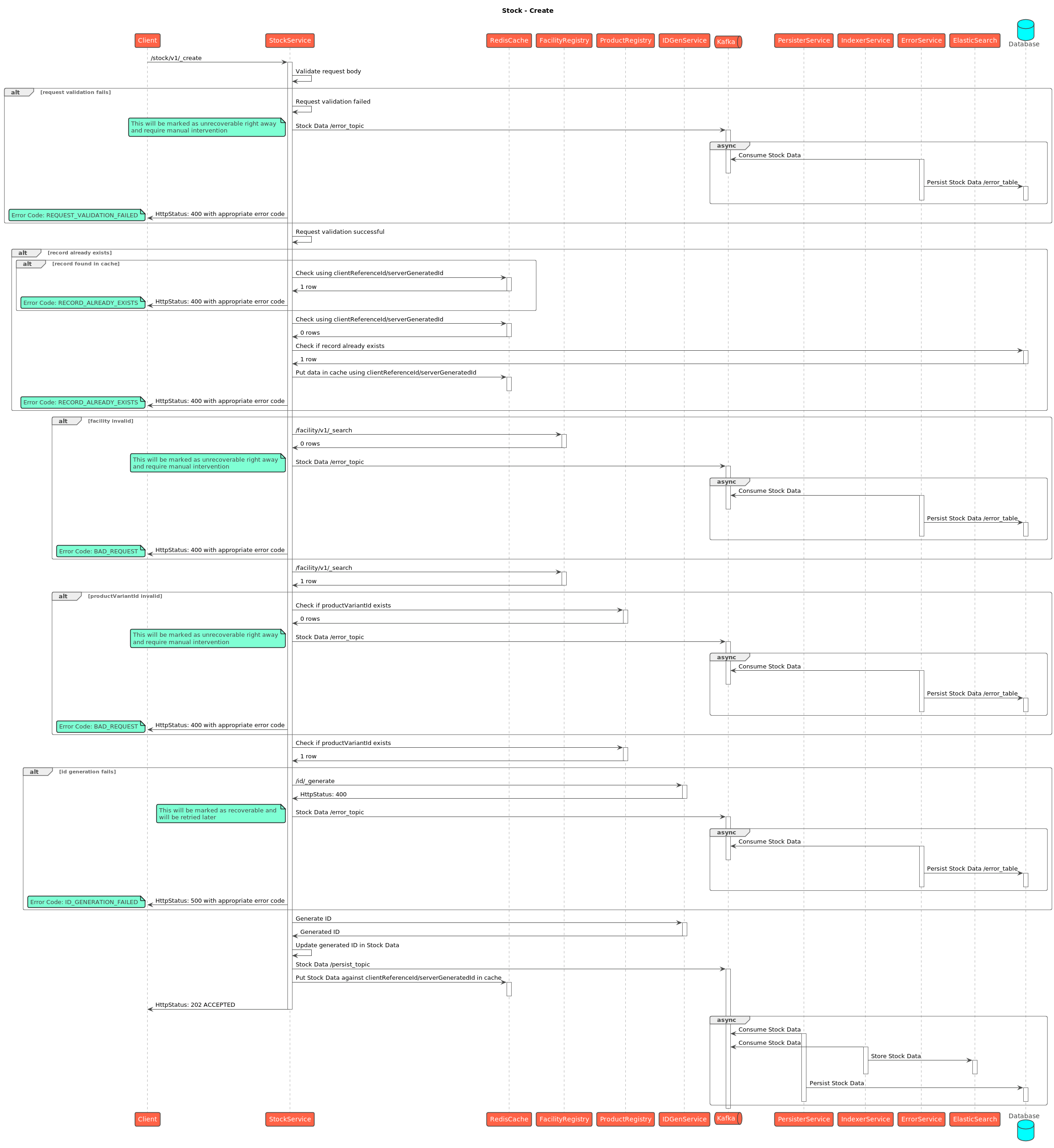
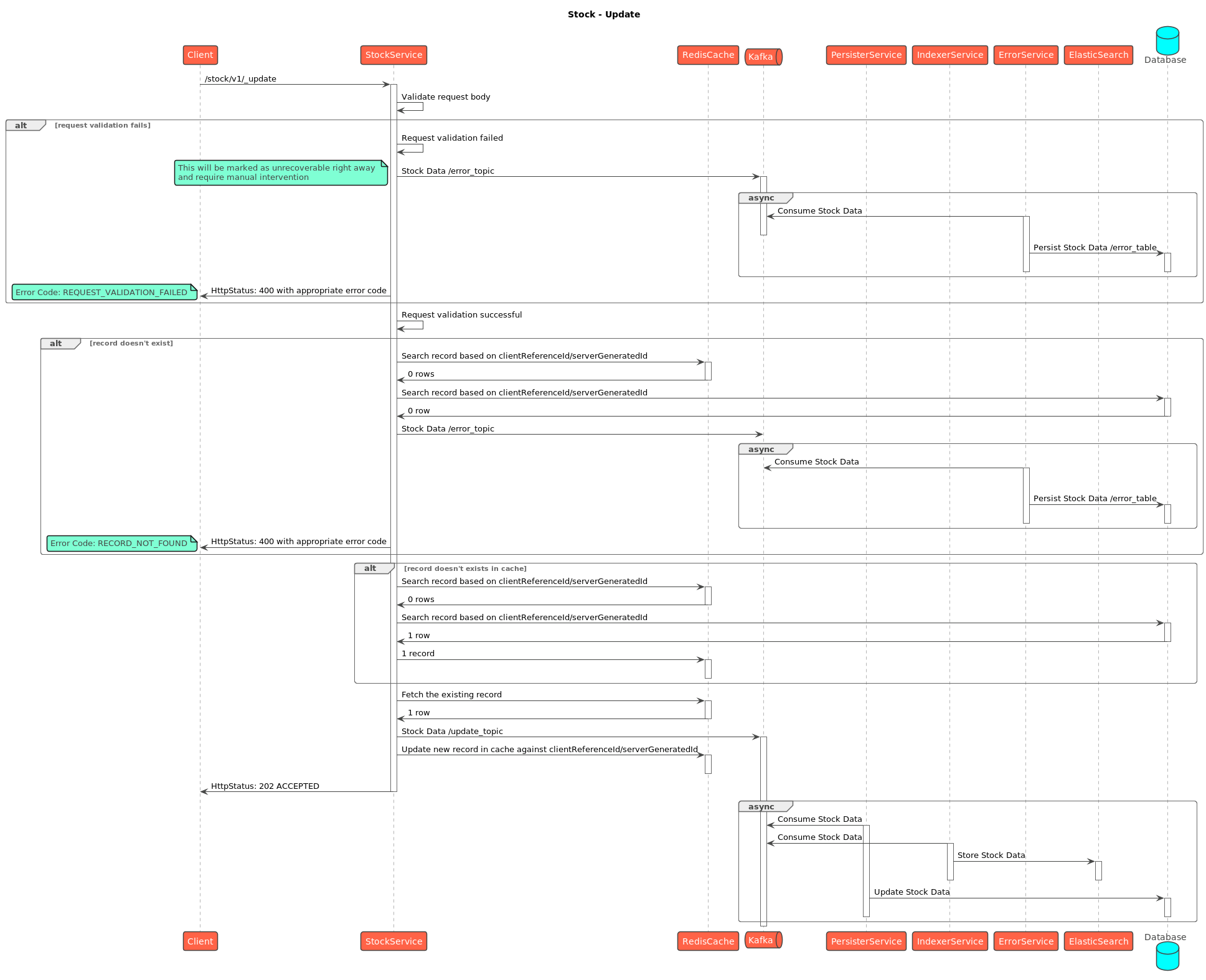
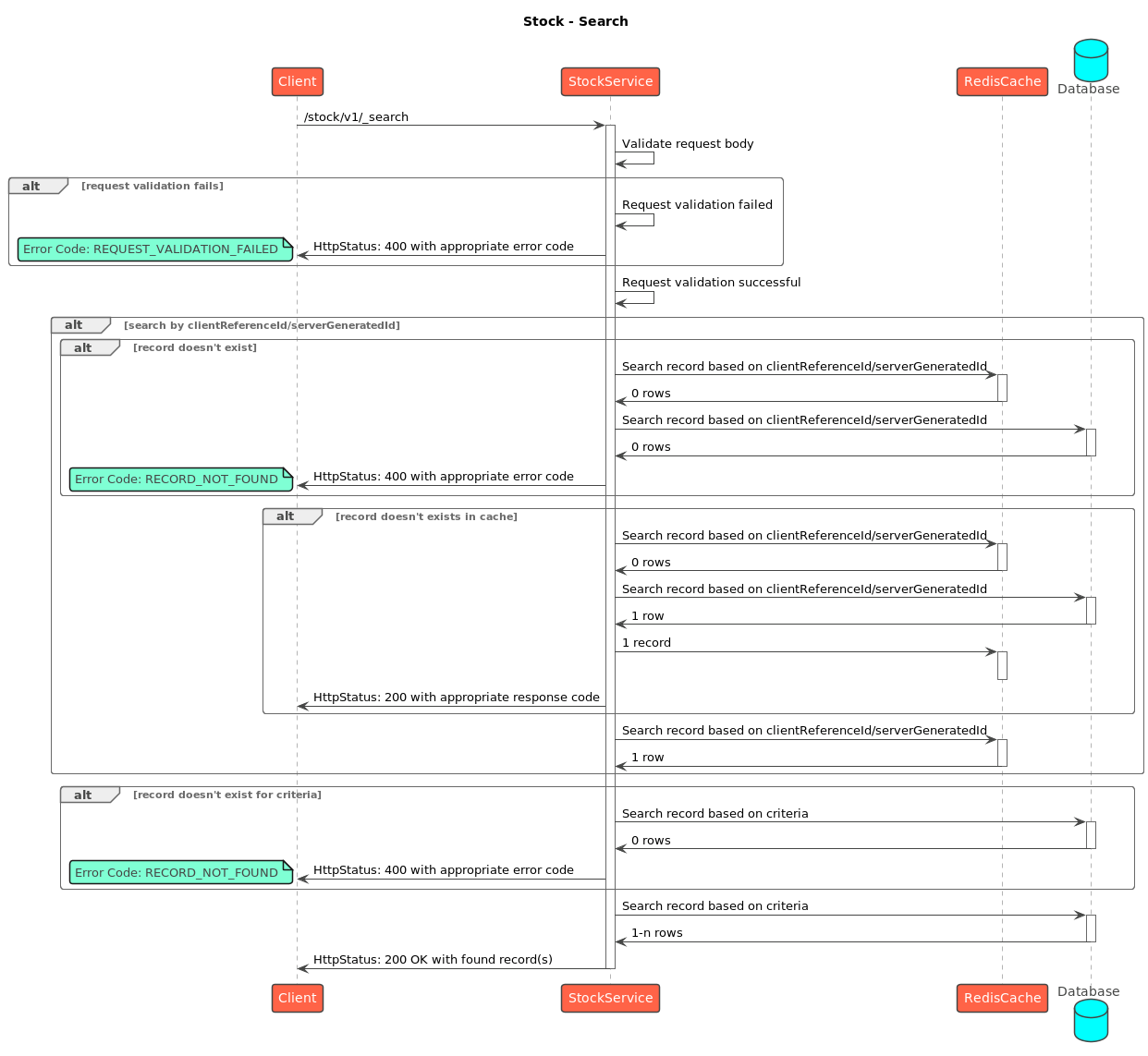
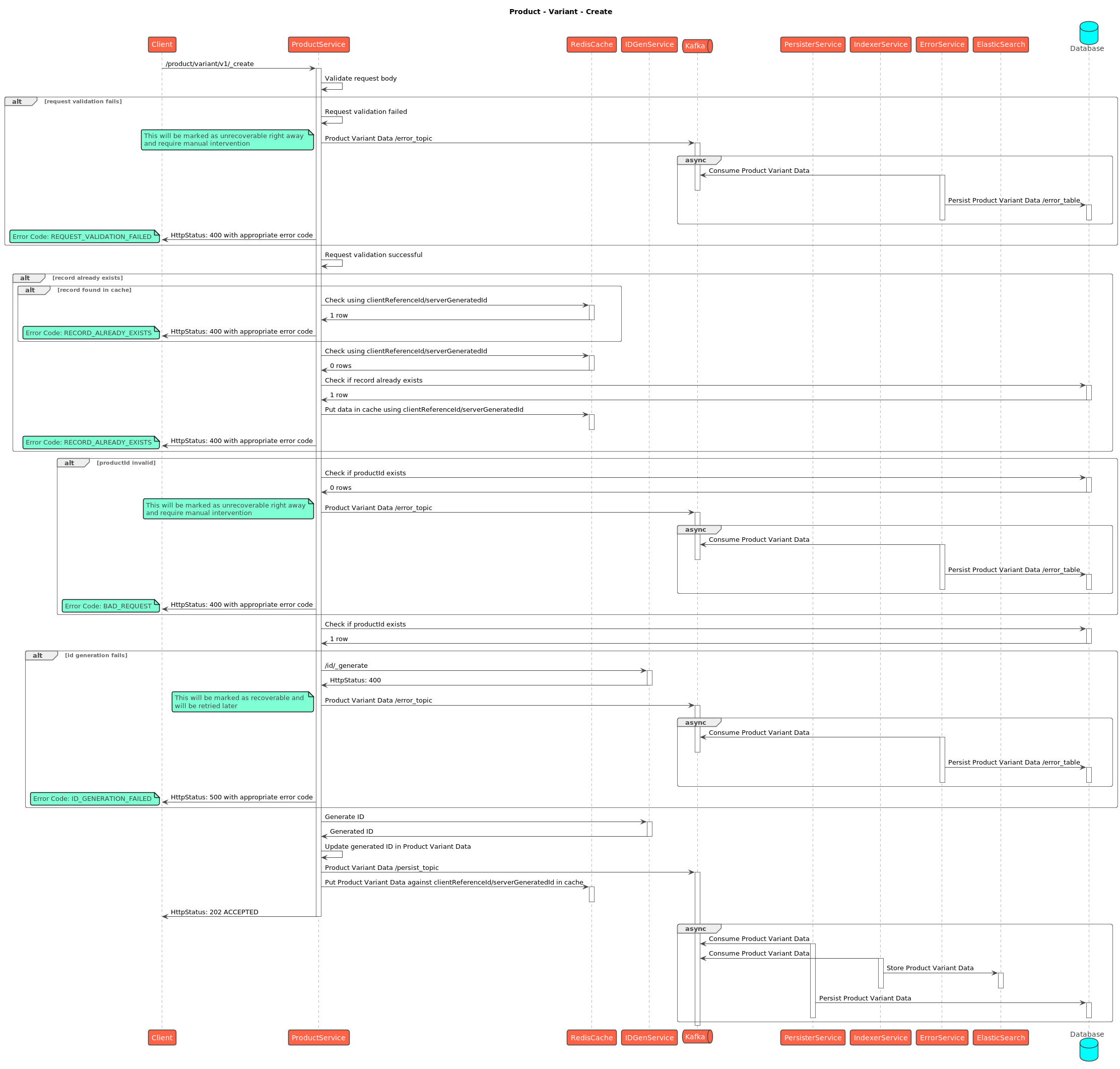
Data Model

Failure / Retry Handling
Async, no batch rollback. A bulk request returns
202before persistence. If one record in the batch fails validation in the consumer, it does not roll back the others — check consumer logs and the record's status.Idempotency is via
clientReferenceId— re-submitting the same one should not create a duplicate row.Optimistic locking via
rowVersionprotects concurrent transfer updates. Reconciliation count submissions allow concurrent writes and use last-write-wins.Soft delete (
isDeleted) everywhere — nothing is hard-deleted; unique constraints include the delete flag.If the persister config for the stock topics is missing/stale in an environment, the API will accept writes but rows will silently not appear in Postgres — a classic "it worked in QA" trap.
Known Risks / Limitations
quantityis signed — negative values are valid (loss/consumption) and there is no DB constraint; bad data is an app/validation concern, not a DB guard.transactingPartyId+transactingPartyTypeare polymorphic with no foreign key — validation is app-level only.transactionType/transactionReasonare free strings. Convention is IN/OUT/LOSS/ADJUSTMENT/TRANSFER, but the DB won't stop other values.Reconciliation is per facility, not per product variant — variant-level discrepancies live in a comments field, not structured columns.
dateOfEntry(field date) ≠createdTime(system date) — both matter for audit; don't conflate them.Relaxed concurrency on the count path (v2.1) means simultaneous count submissions are accepted with last-write-wins — acceptable for counts, but a behavioural change QA must be aware of.
Last updated
Was this helpful?