> For the complete documentation index, see [llms.txt](https://docs.digit.org/llms.txt). Markdown versions of documentation pages are available by appending `.md` to page URLs; this page is available as [Markdown](https://docs.digit.org/health/v2.0/deploy/configuration/hcm-console-configuration/console-ui-configuration/hcm-console-web-ui/campaign-setup/my-campaign/campaign-timeline.md).
# Campaign Timeline
## Overview
The **Campaign Timeline** provides a visual view of a campaign’s progress across its lifecycle. It helps users track creation stages and understand the current state of a campaign.
The timeline is available for campaigns in the following states:
* **Upcoming**
* **Ongoing**
* **Completed**
* **Failed**
Users can access the timeline from:
* The **Campaign Summary** page
* The **My Campaign** screen (via the Actions menu)
## Steps
### Step 1: Enable Timeline Access
#### Access Points
1. **Campaign Summary**
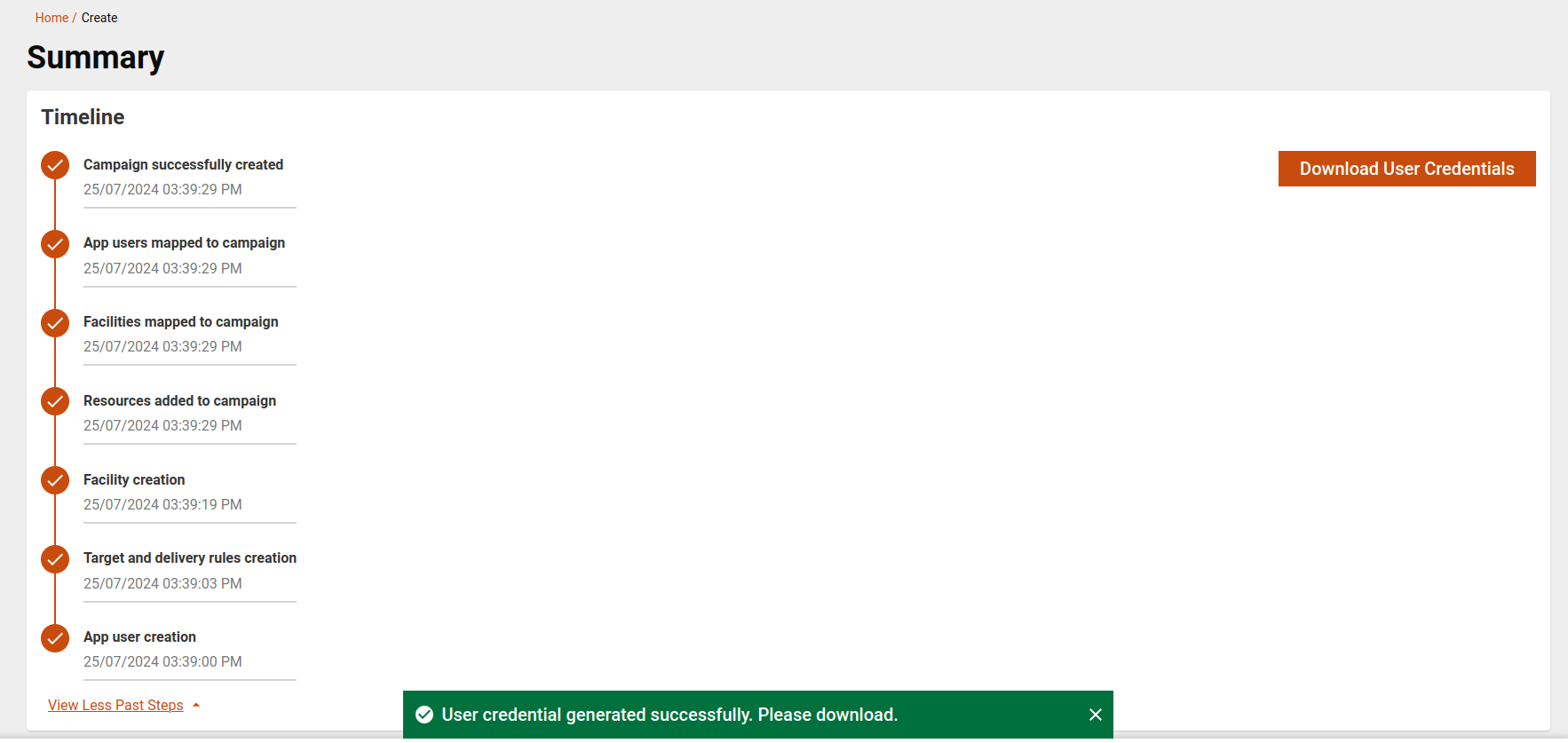
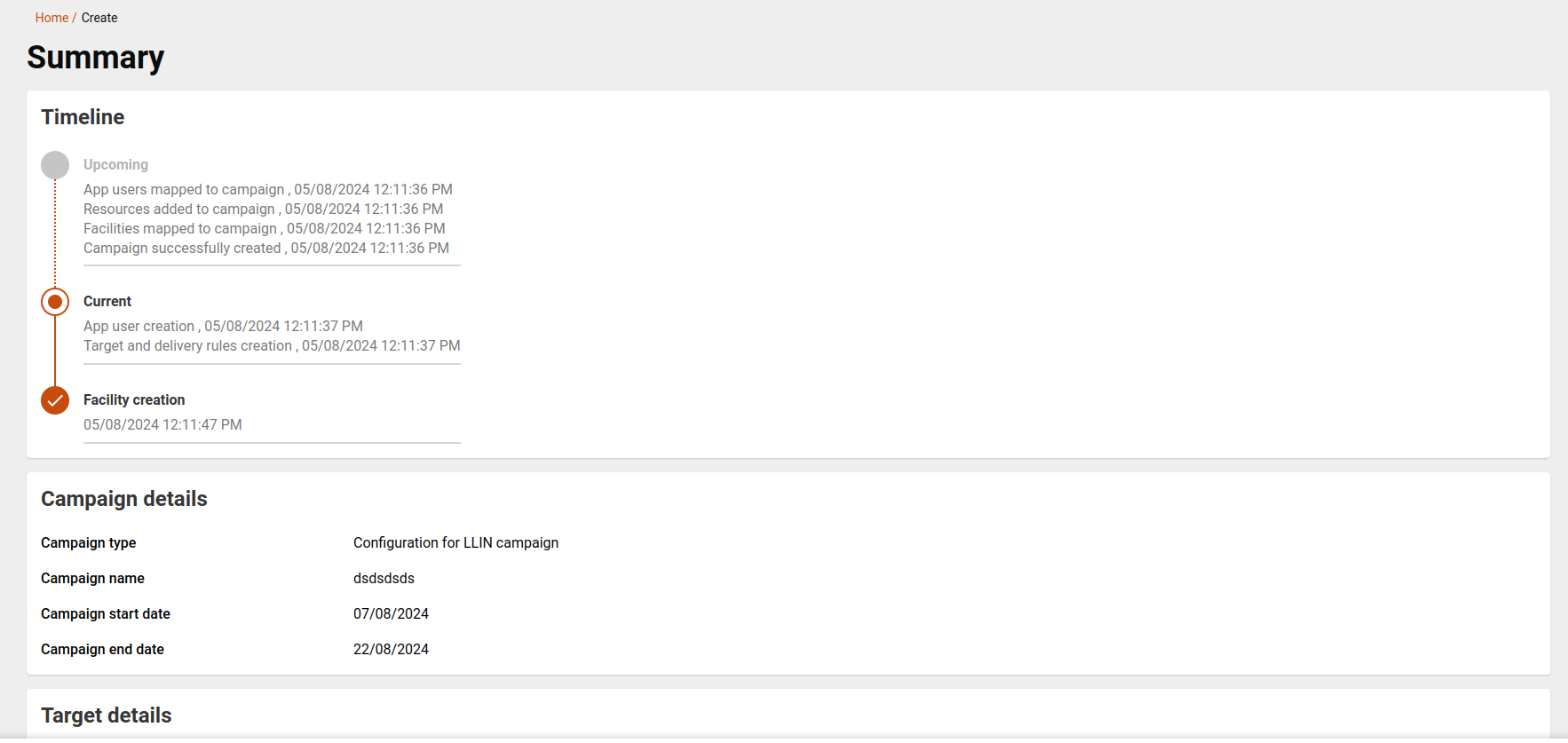
* The timeline is displayed directly on the summary page.
2. **My Campaign Screen**
* Users click the **Action** button for a campaign.
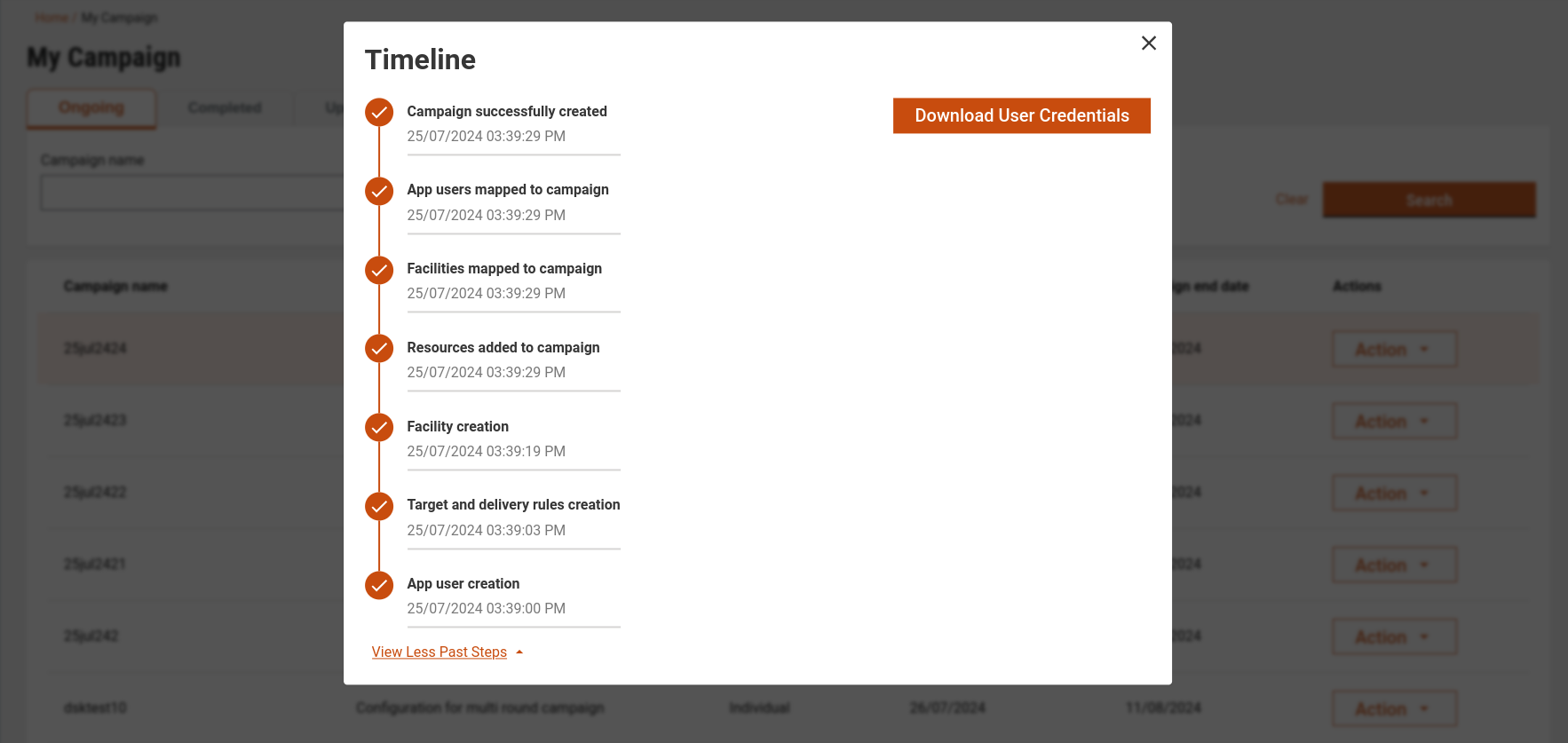
* The timeline opens as a **pop-up modal**.
Timeline In summary page
### Step 2: Render Timeline Stages
**Purpose:** Show campaign progress visually.
#### Timeline States
The timeline displays campaign stages as:
* **Upcoming** – Steps that are yet to start
* **Current** – The step currently in progress
* **Completed** – Steps that have finished successfully
These states update dynamically based on campaign status.
### Step 3: Display Timeline During Campaign Creation
**Behaviour**
* While campaign creation is in progress:
* The timeline shows:
* Completed steps
* The current step
* Upcoming steps
* This view is consistent across:
* Summary screen
* My Campaign timeline pop-up
Timeline in my campaign
### Step 4: Configure Timeline Pop-up from My Campaign
**Behaviour**
* Clicking **Action → View Timeline** (or equivalent option):
* Opens the timeline as a pop-up
* Displays the same step progression as the summary screen
* User credentials become available once campaign creation completes successfully.
## Reference Links
* [Timeline Component File Link](https://github.com/egovernments/DIGIT-Frontend/blob/campaign/micro-ui/web/micro-ui-internals/packages/modules/campaign-manager/src/components/TimelineComponent.js)
#### API Details
End point
Method
Params
/project-factory/v1/project-type/getProcessTrack
POST
params: { campaignId: campaignId, },
---
# Agent Instructions
This documentation is published with GitBook. GitBook is the documentation platform designed so that both humans and AI agents can read, navigate, and reason over technical content effectively. Learn more at gitbook.com.
## Querying This Documentation
If you need additional information that is not directly available in this page, you can query the documentation dynamically by asking a question.
Perform an HTTP GET request on the current page URL with the `ask` query parameter, and the optional `goal` query parameter:
```
GET https://docs.digit.org/health/v2.0/deploy/configuration/hcm-console-configuration/console-ui-configuration/hcm-console-web-ui/campaign-setup/my-campaign/campaign-timeline.md?ask=&goal=
```
`ask` is the immediate question: it should be specific, self-contained, and written in natural language.
`goal` is optional and describes the broader end goal you are ultimately trying to accomplish on behalf of the user. GitBook uses it to tailor the answer towards what is most useful for that goal.
The response will contain a direct answer to the question and relevant excerpts and sources from the documentation.
Use this mechanism when the answer is not explicitly present in the current page, you need clarification or additional context, or you want to retrieve related documentation sections.