
Project
Overview
The Project service is the operational backbone of a health campaign. A project is the on-the-ground unit of work. For example: “Measles vaccination round in District X”. The service records everything needed to run that unit and everything that happened:
who is working on it (staff),
who it is for (beneficiaries — the households or individuals being served),
where it operates (facilities and boundaries),
what supplies are tied to it (resources), and
what was done in the field — every visit, delivery or service event (tasks), plus the commodities each task consumed (task resources).
It also records lighter-weight field signals: a worker's location trail and user actions (what a field user did on their device, including stock-count submissions).
In short: "what is the campaign, who runs it, who is it for, and what happened on the ground?"
Business Flow
During campaign setup, Project Factory creates the projects, attaches staff, links facilities, and registers the target beneficiaries. The project is the registry that all of this lands in.
During the campaign (runtime), the field/mobile app reads its assigned project and then writes back tasks — each beneficiary visit or service delivery becomes a task, and the commodities used become task resources. The app also streams a worker's location and user actions as they move through the day.
Beneficiary tagging links a household/individual to the project so the app knows who is eligible and what they have already received.
The data feeds the dashboards (via the transformer → Elasticsearch) so programme managers can see coverage, staff activity and consumption per area.
Key APIs / Entry Points
Base path /project. Most sub-entities provide create, update, delete, and search endpoints. Single and bulk variants are available where listed. The list below covers the most important endpoints.
POST /project/v1/_create, /v1/_update, /v1/_search, /v2/_search
Manage the project itself (the campaign unit). v2 search returns richer linked data.
POST /project/task/v1/_create, /bulk/_create … _search
Record field work — visits, deliveries, service events (the highest-volume path).
POST /project/beneficiary/v1/_create … _search
Tag households/individuals as targets of a project.
POST /project/staff/v1/_create … _search
Assign / unassign workers to a project.
POST /project/facility/v1/_create … _search
Link facilities (and their boundaries) to a project.
POST /project/resource/v1/_create … _search
Link products/supplies to a project.
POST /project/user-action/v1/bulk/_create, /bulk/_update, /_search
Capture field-user actions, including bulk stock-count updates (link)
POST /project/user-location/..., /check/bandwidth
Worker location trail and a connectivity check used by the mobile app.
Kafka entry points (async). Bulk writes land on the service's own consumer topics (e.g. save-project-task-bulk-topic, save-user-action-project-bulk-topic, the beneficiary/staff/facility/resource equivalents). After processing, persisted rows go out on save-* / update-* / delete-* topics (e.g. save-project-task-topic, update-user-action-project-topic) for the persister and transformer.
Swagger contract:

Kafka topics
in topics are consumed by the Project service. out topics are produced by it.
save-project-task-bulk-topic
in
Bulk task create requests
update-project-task-bulk-topic
in
Bulk task update requests
delete-project-task-bulk-topic
in
Bulk task delete requests
save-project-staff-bulk-topic
in
Bulk staff create requests
update-project-staff-bulk-topic
in
Bulk staff update requests
delete-project-staff-bulk-topic
in
Bulk staff delete requests
save-project-facility-bulk-topic
in
Bulk project-facility create requests
update-project-facility-bulk-topic
in
Bulk project-facility update requests
delete-project-facility-bulk-topic
in
Bulk project-facility delete requests
save-project-resource-bulk-topic
in
Bulk resource create requests
update-project-resource-bulk-topic
in
Bulk resource update requests
delete-project-resource-bulk-topic
in
Bulk resource delete requests
project-beneficiary-consumer-bulk-create-topic
in
Bulk beneficiary create requests
project-beneficiary-consumer-bulk-update-topic
in
Bulk beneficiary update requests
project-beneficiary-consumer-bulk-delete-topic
in
Bulk beneficiary delete requests
save-user-action-project-bulk-topic
in
Bulk user-action create requests
update-user-action-project-bulk-topic
in
Bulk user-action update requests
save-location-capture-project-bulk-topic
in
Bulk location-capture create requests
save-project / update-project / update-project-date
out
Persist project + date changes
save-project-task-topic / update-project-task-topic / delete-project-task-topic
out
Persist task create / update / delete
save-project-staff-topic / update-project-staff-topic / delete-project-staff-topic
out
Persist staff create / update / delete
save-project-facility-topic / update-project-facility-topic / delete-project-facility-topic
out
Persist project-facility create / update / delete
save-project-resource-topic / update-project-resource-topic / delete-project-resource-topic
out
Persist resource create / update / delete
save-project-beneficiary-topic / update-project-beneficiary-topic / delete-project-beneficiary-topic
out
Persist beneficiary create / update / delete
save-user-action-project-topic / update-user-action-project-topic
out
Persist user-action create / update
save-location-capture-project-topic
out
Persist location-capture
project-staff-attendance-health-topic
out
Emit staff attendance event
Dependencies
idgen — generates project/task/beneficiary record IDs.
household & individual — the registries a beneficiary points at (validation of who is being served).
facility — validates facilities linked to a project.
product — validates products linked as project resources/task resources.
boundary — administrative boundaries a project and its facilities operate in.
egov-mdms — master data (project types, task statuses, tenant config).
health-services-common / -models — shared clients, validators, POJOs.
Kafka — async create/update/delete pipeline for every entity.
egov-persister (deployed via the
configs/repo) — actually writes the rows to Postgres off thesave-*topics.transformer → Elasticsearch — builds the dashboard read-model from the same topics.
Redis — caching used by the shared repository layer.
Process Flow
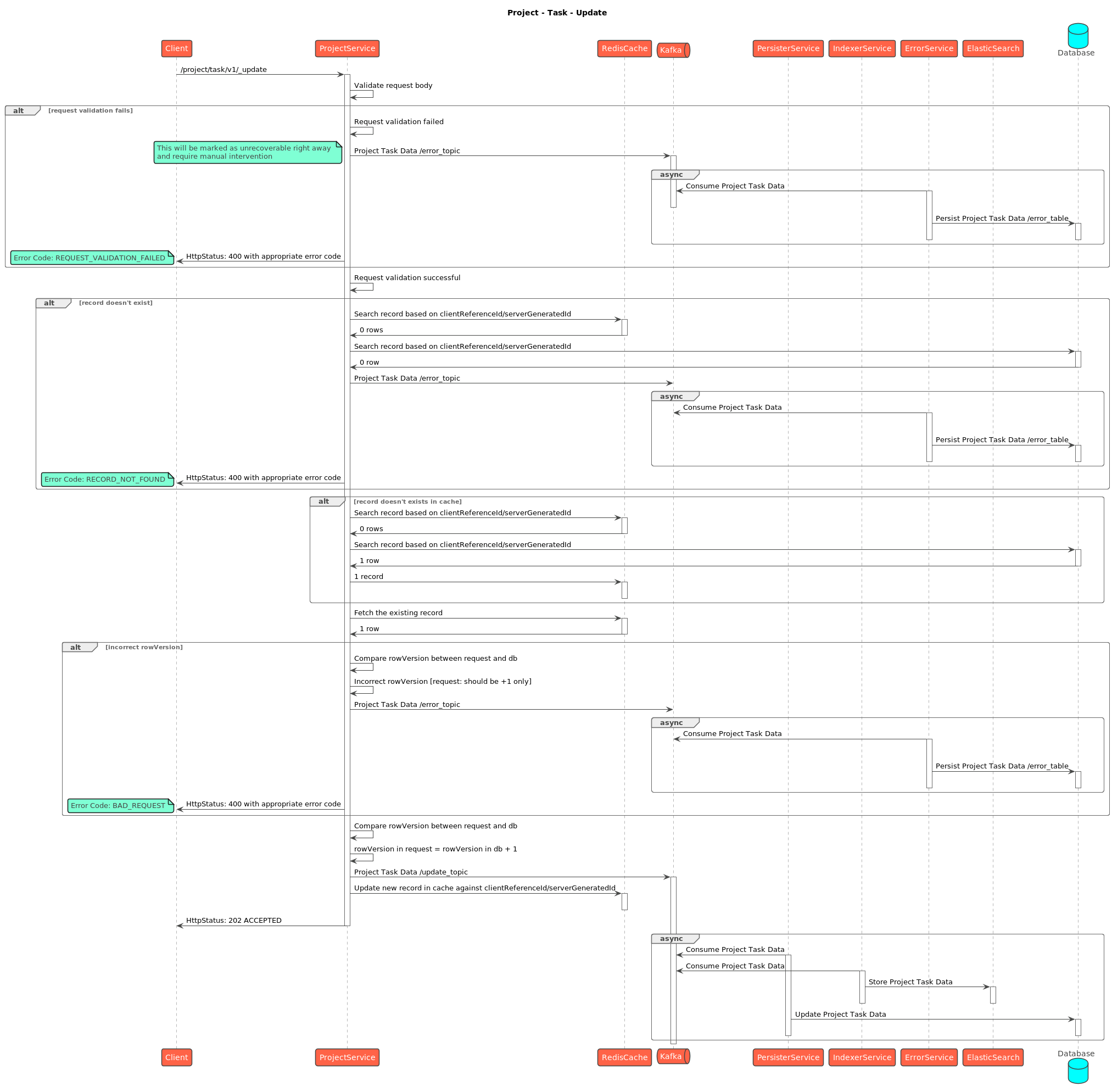
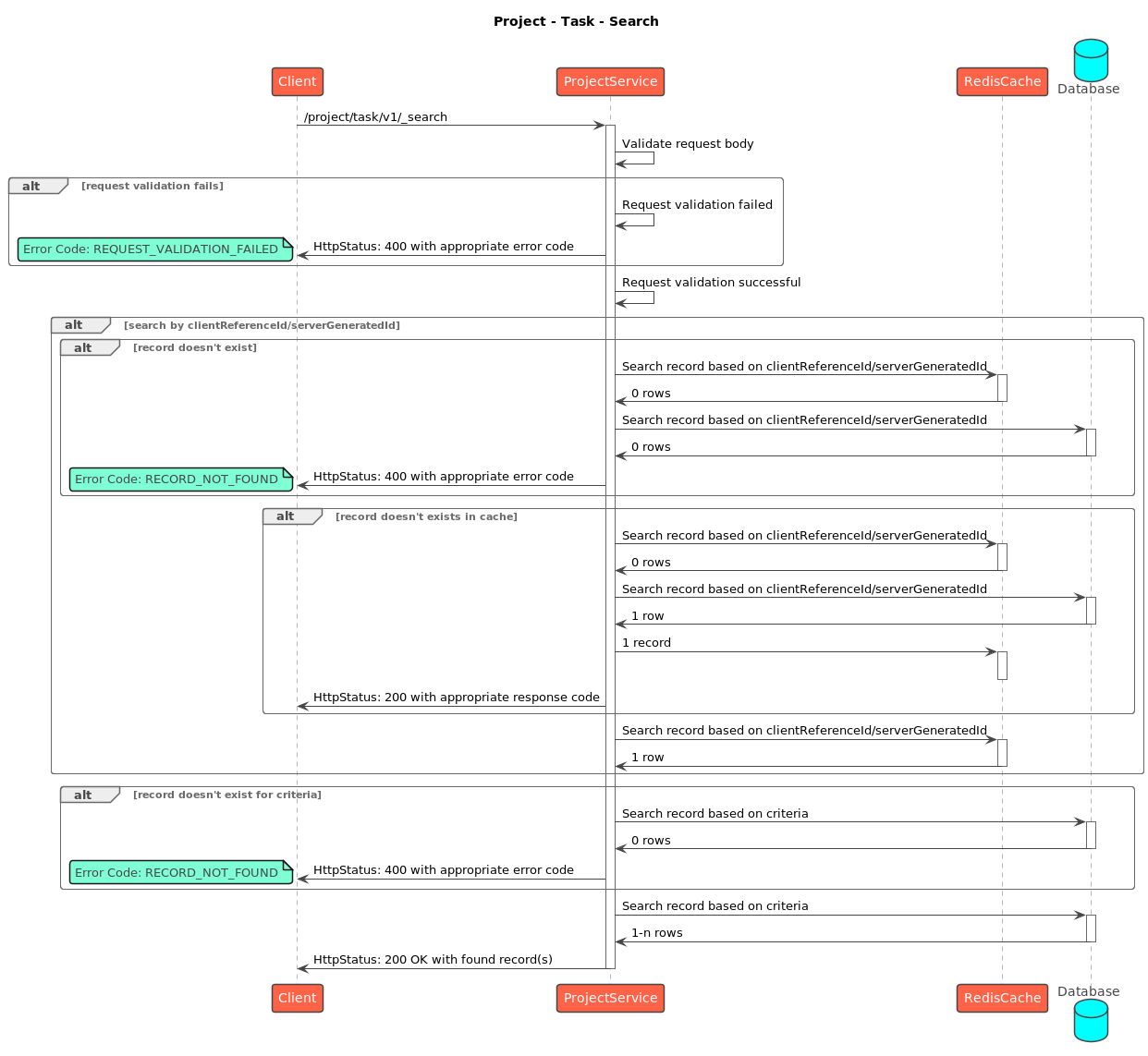
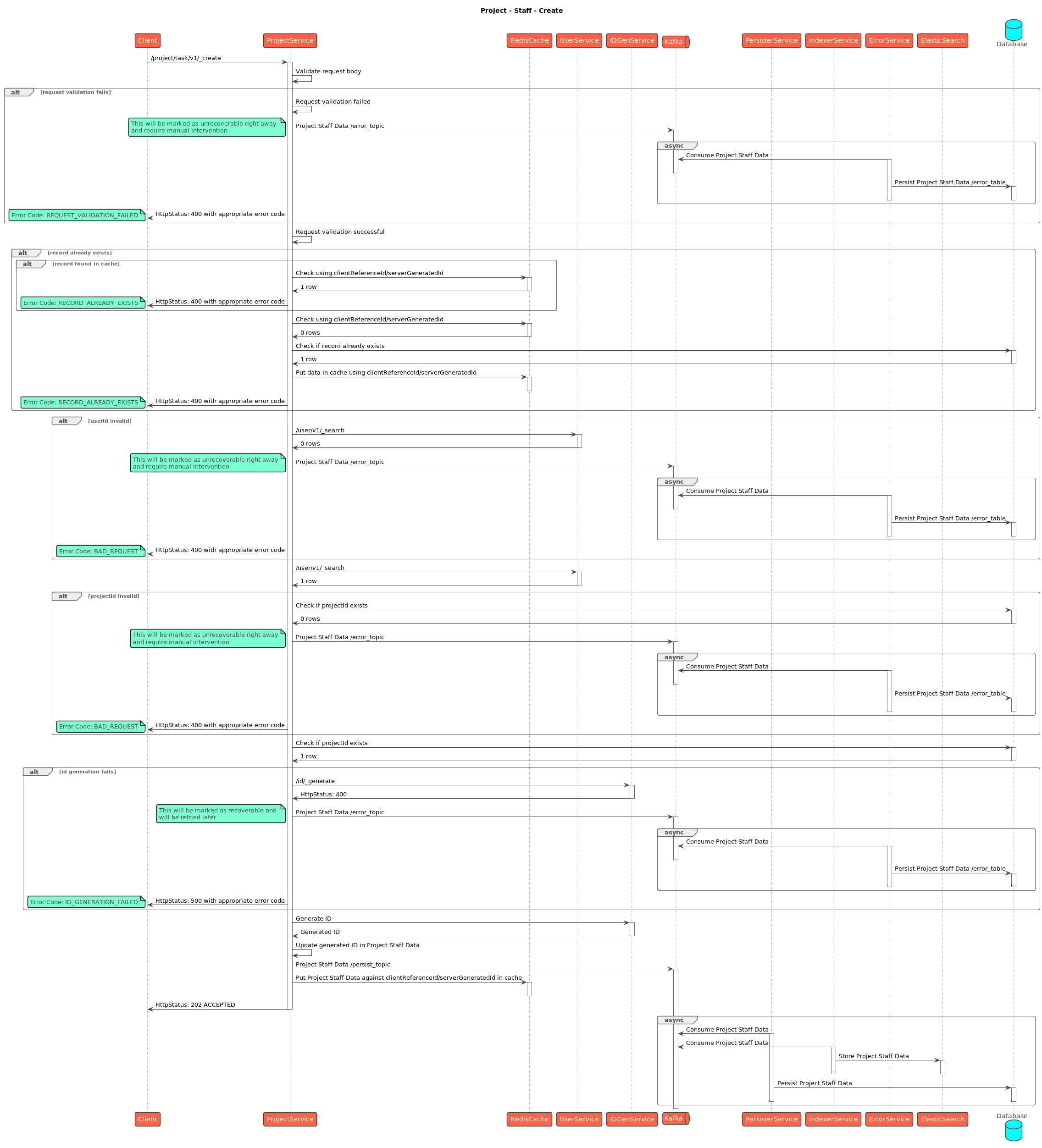
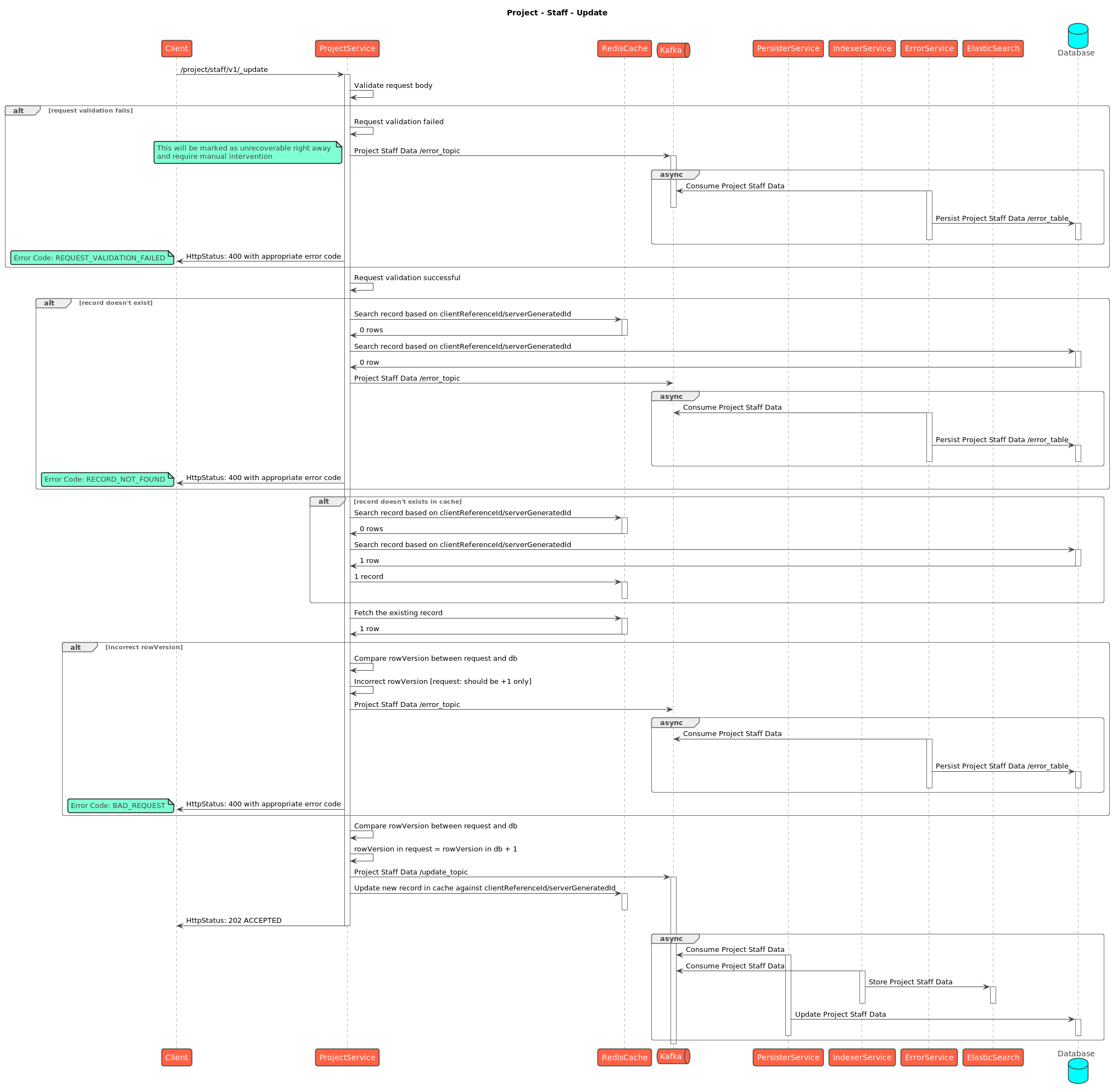
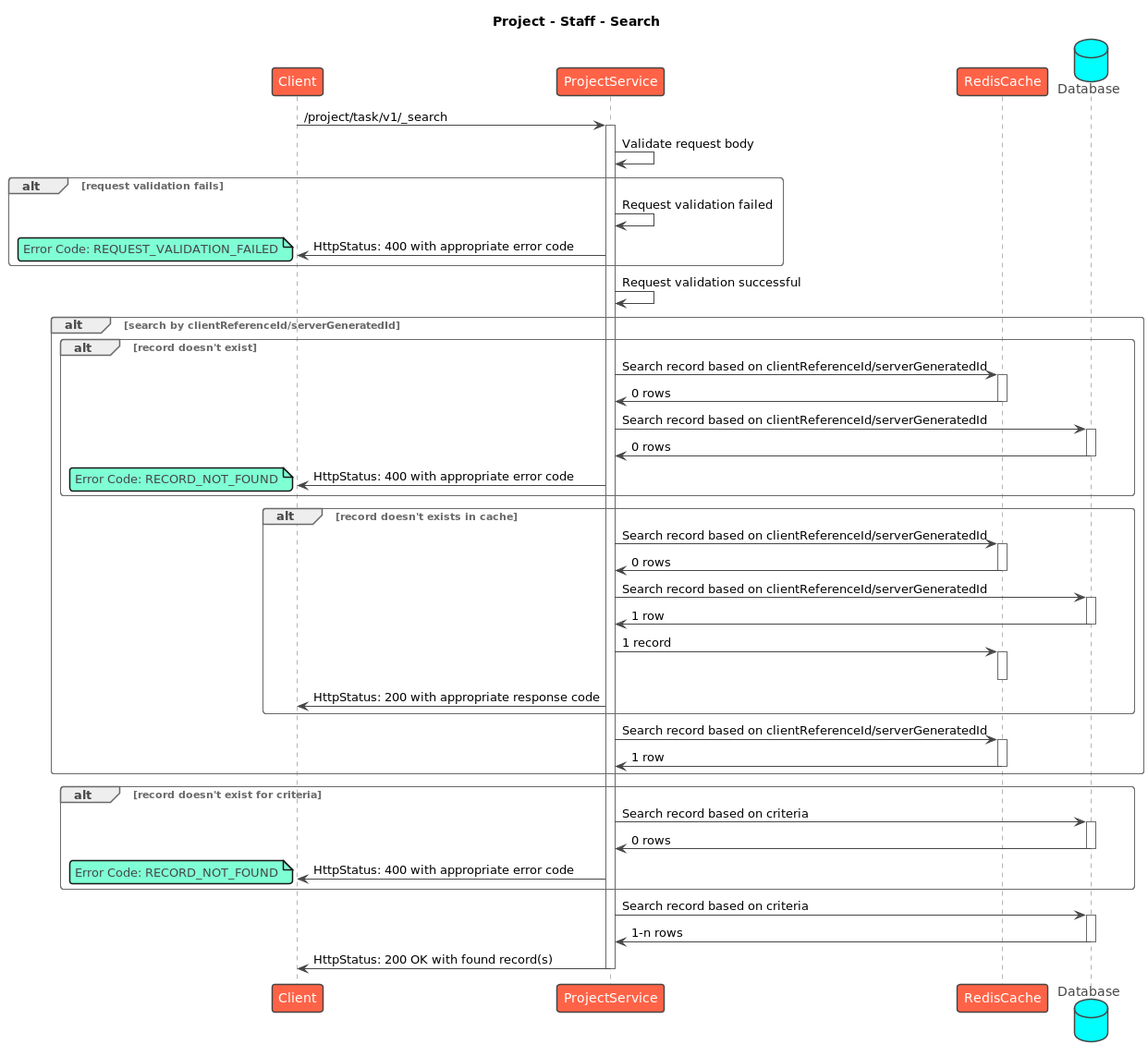
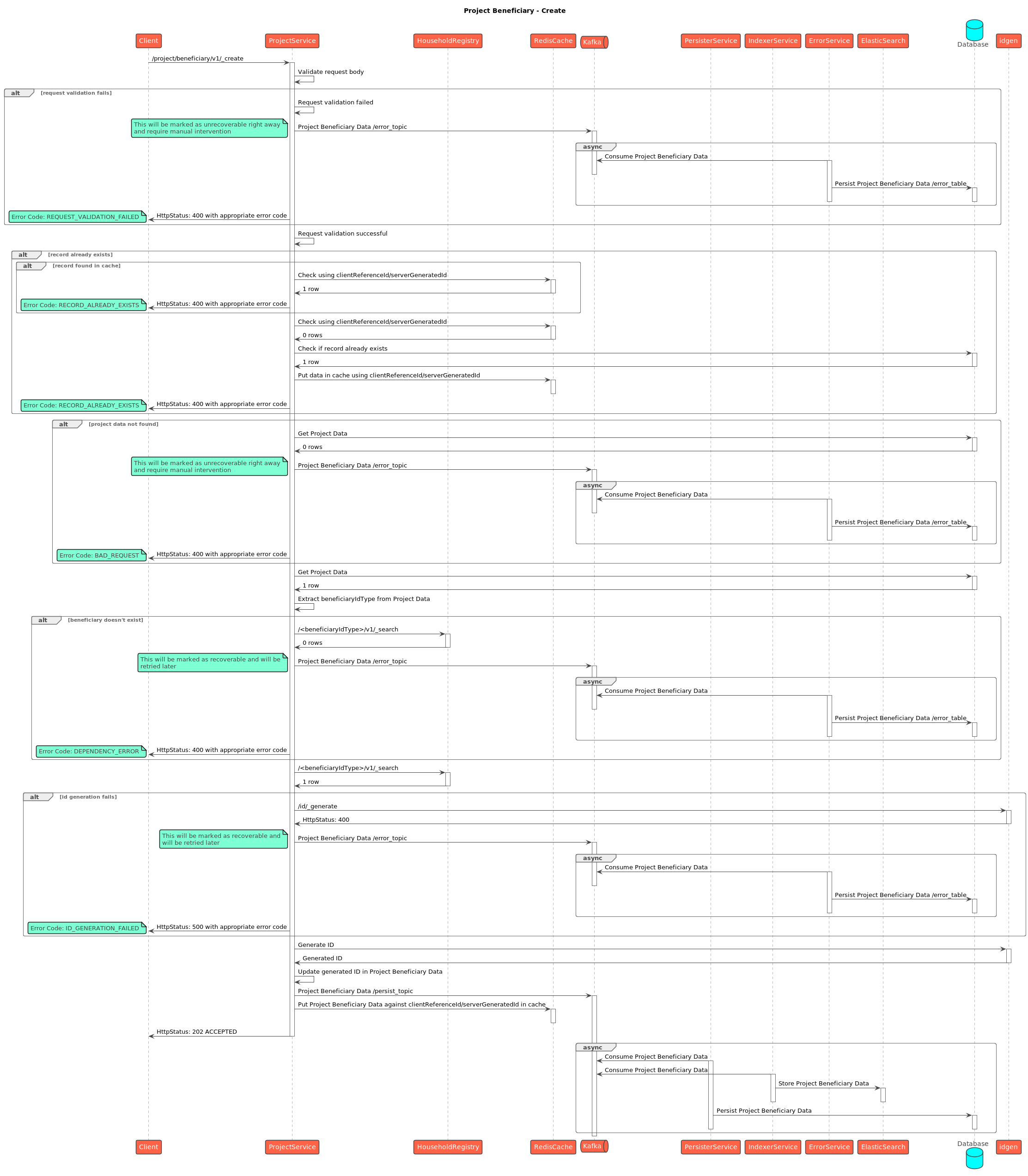
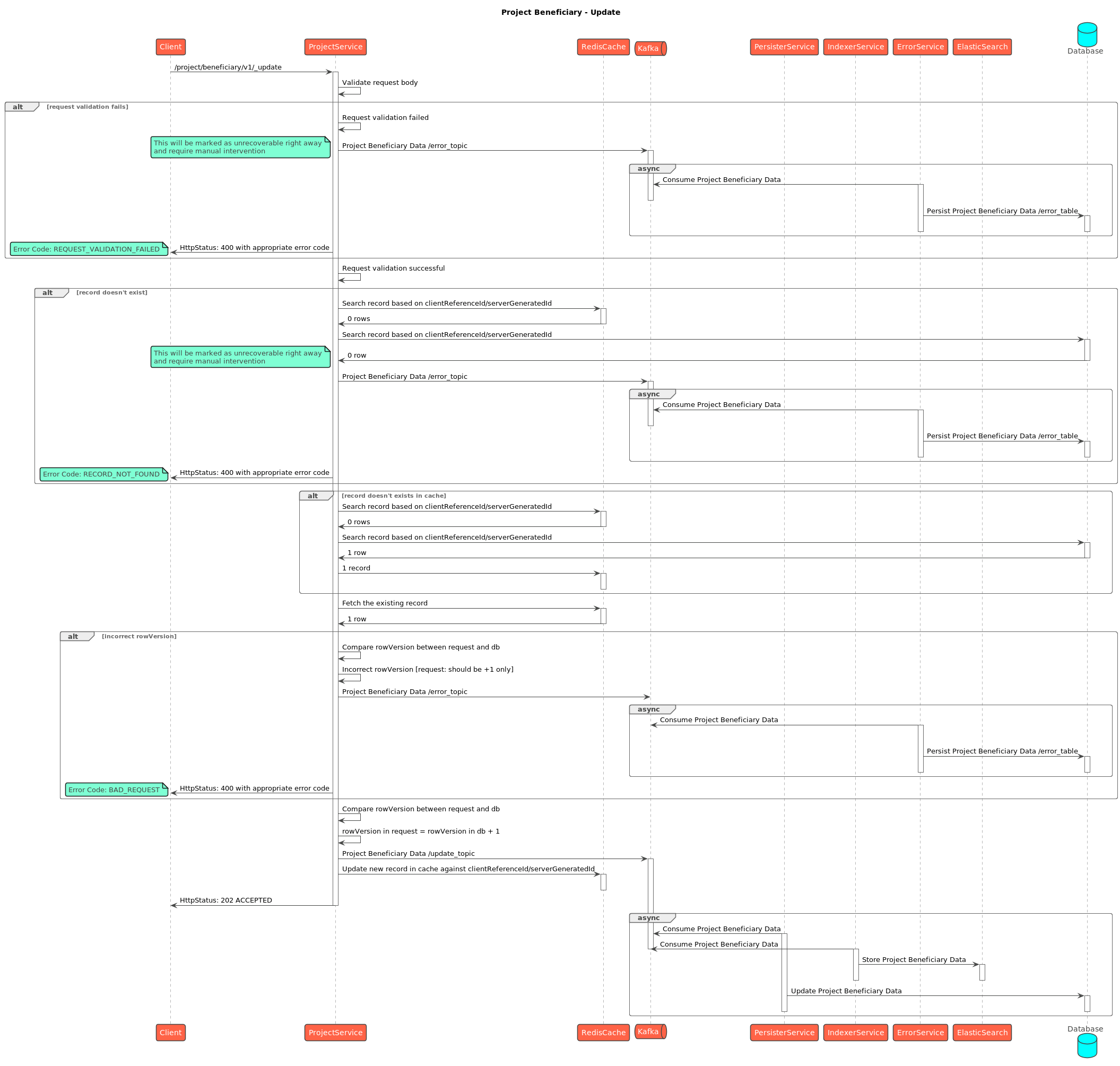
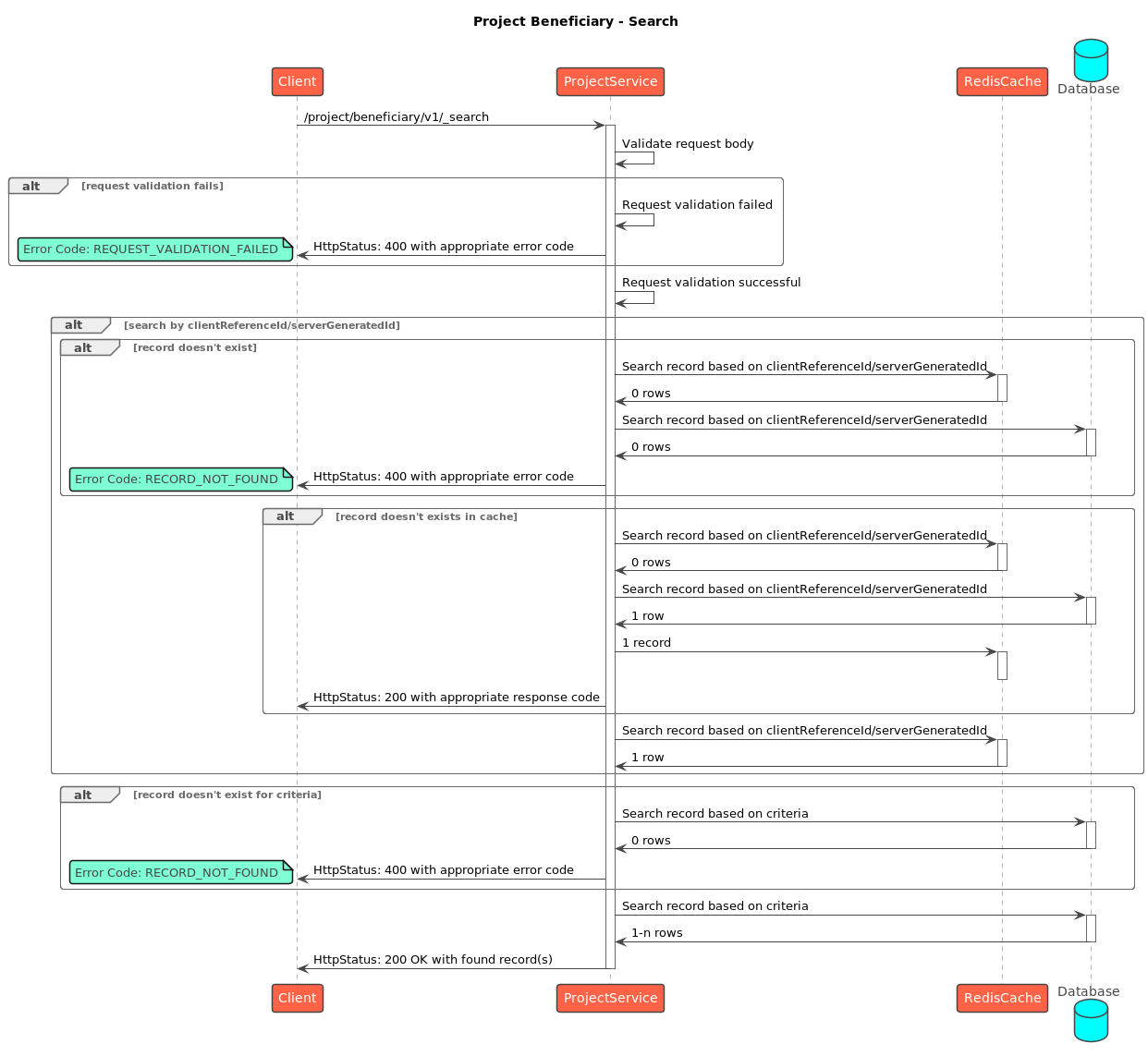
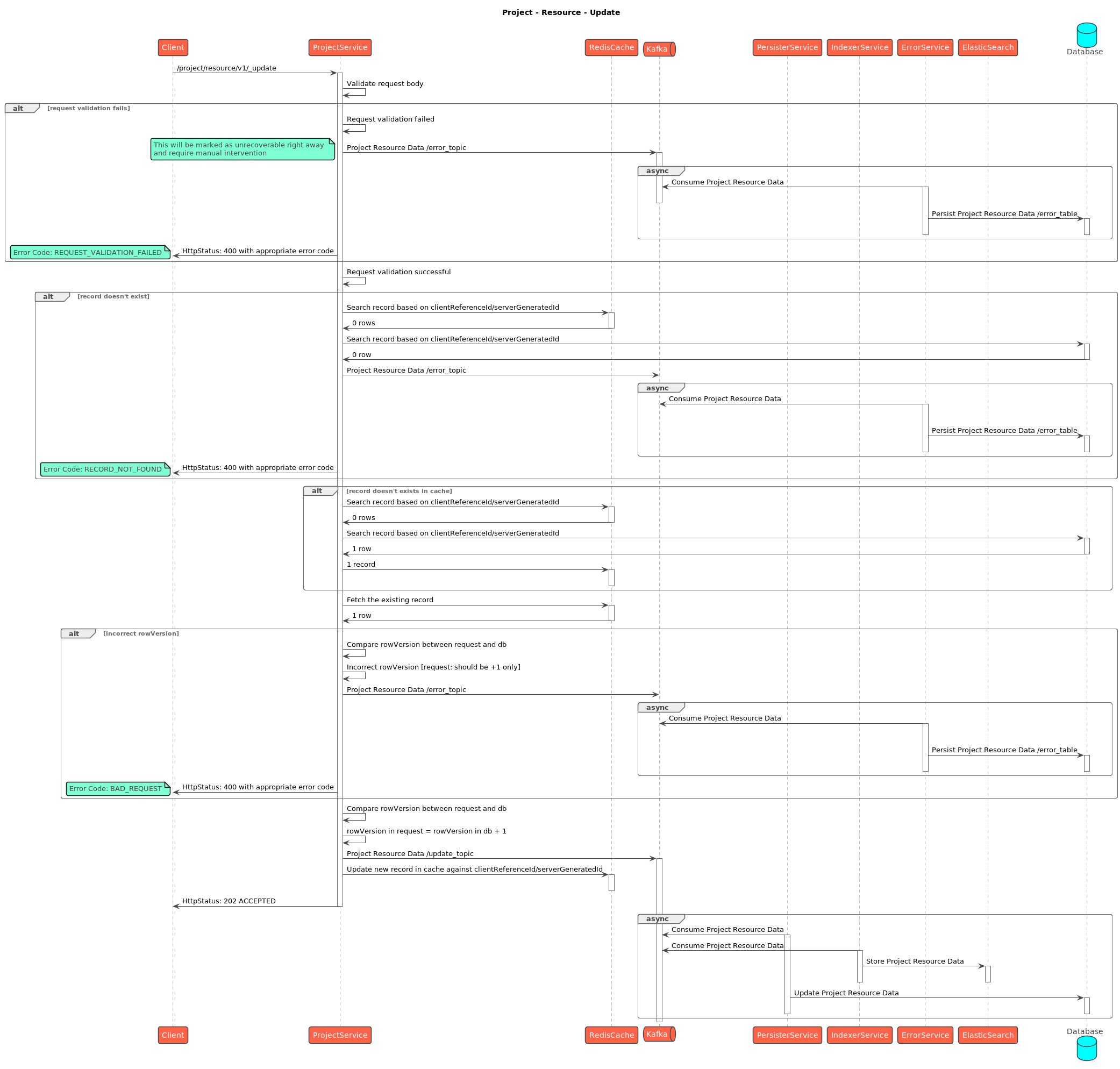
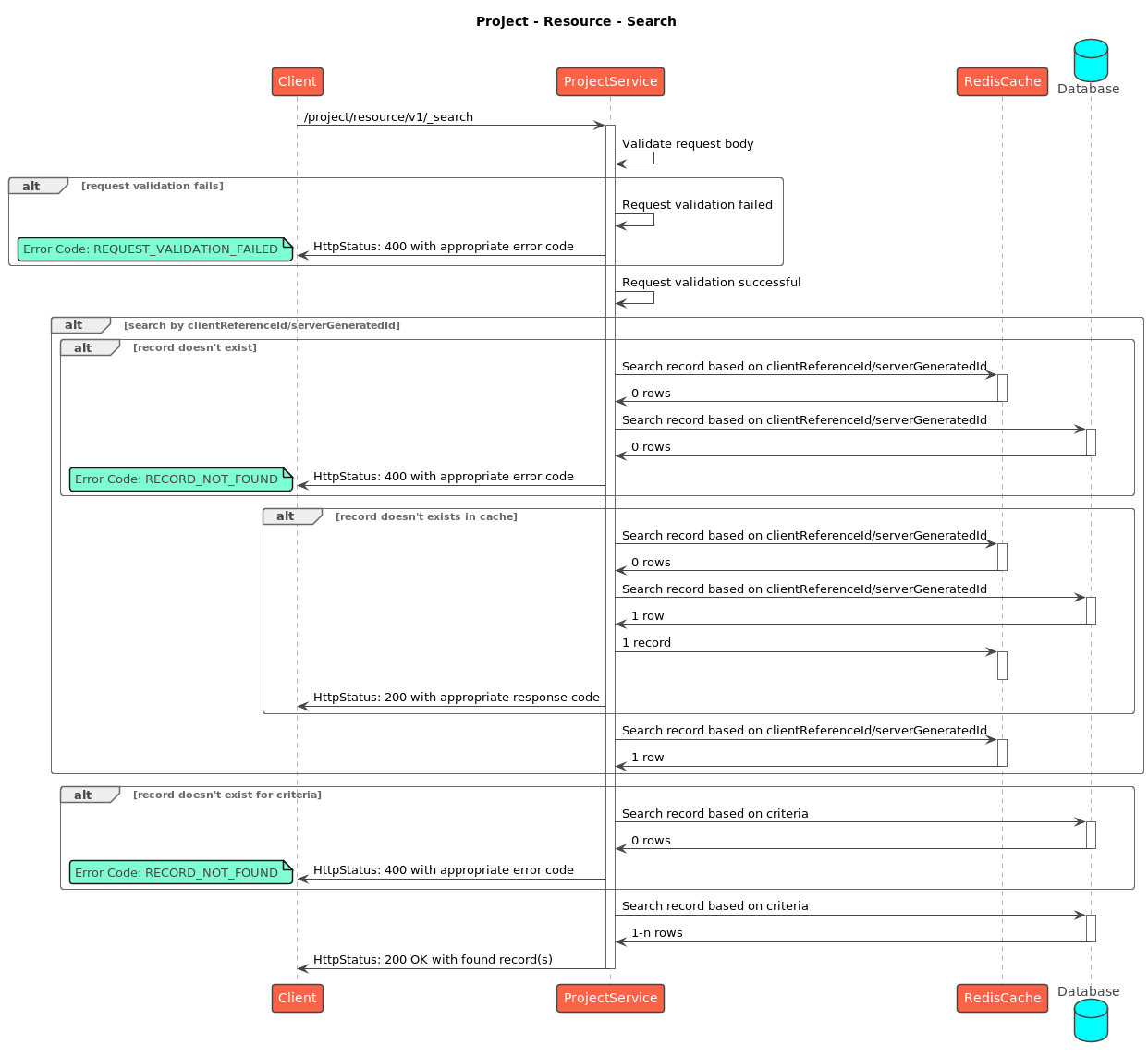
Writes are asynchronous: the API validates, enriches and acknowledges, then a Kafka consumer persists. The service does not write Postgres directly — it emits a save-* event that egov-persister turns into a row, while the transformer indexes the same event into Elasticsearch for dashboards.
Sequence Diagrams
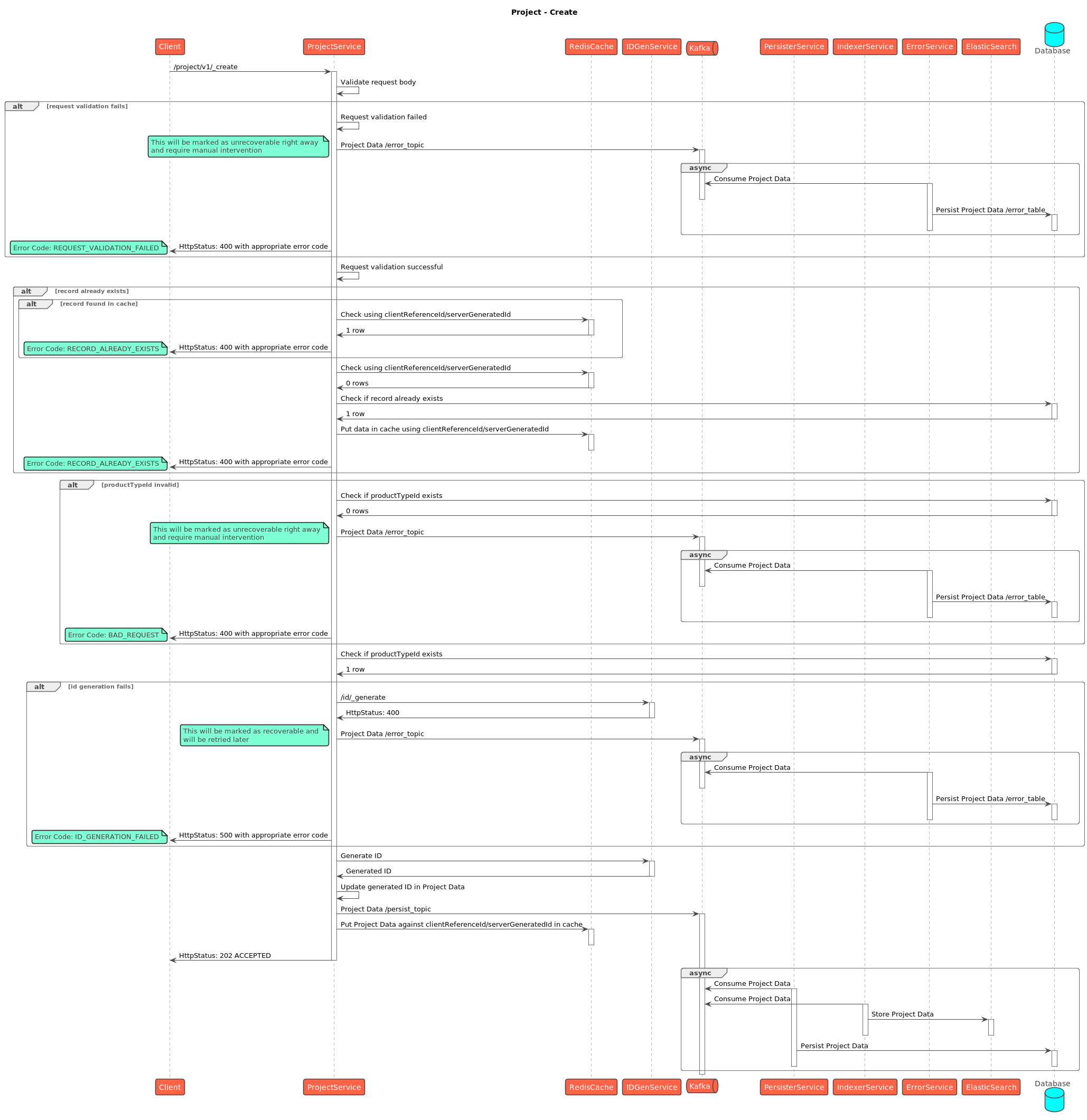
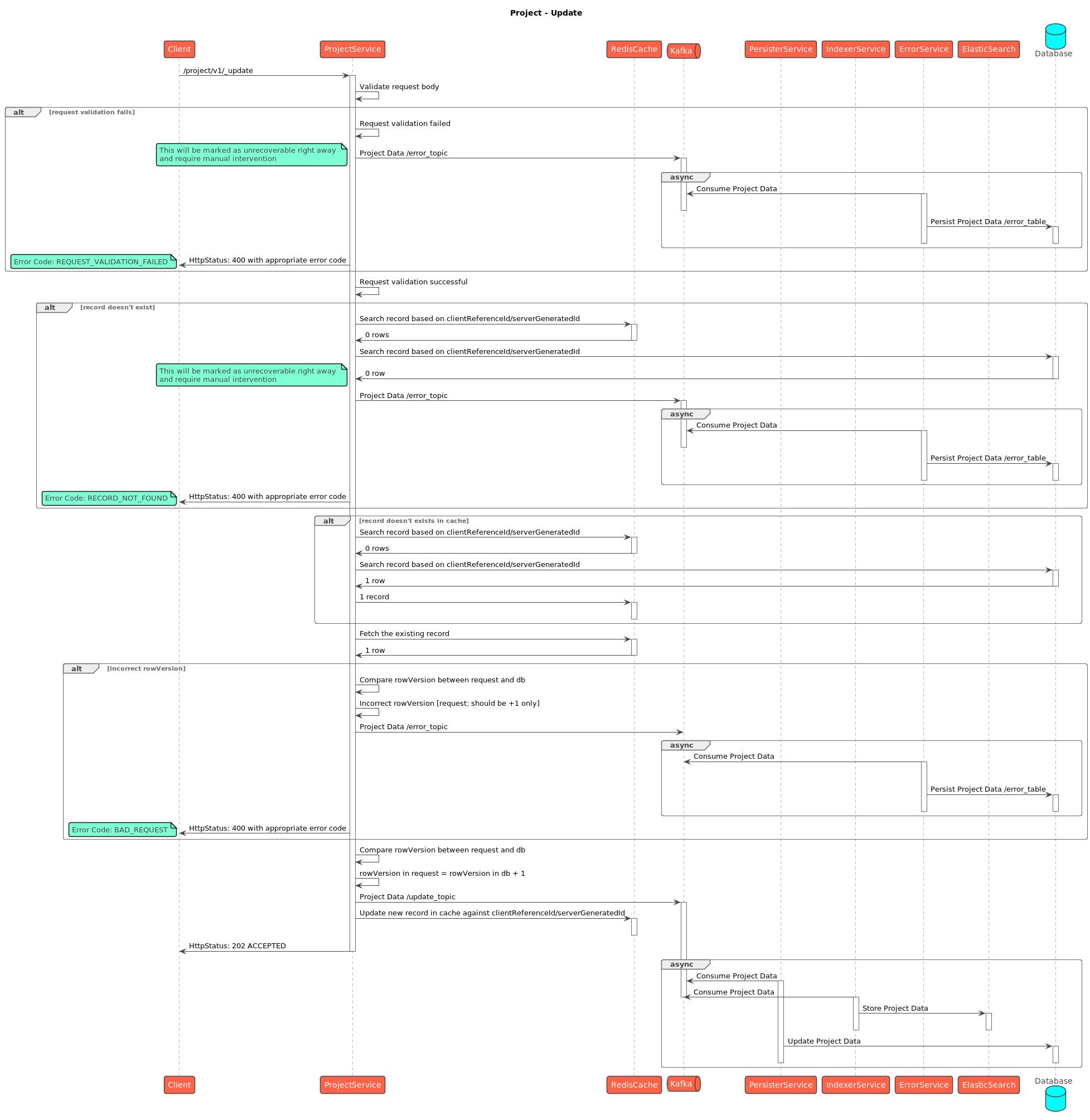
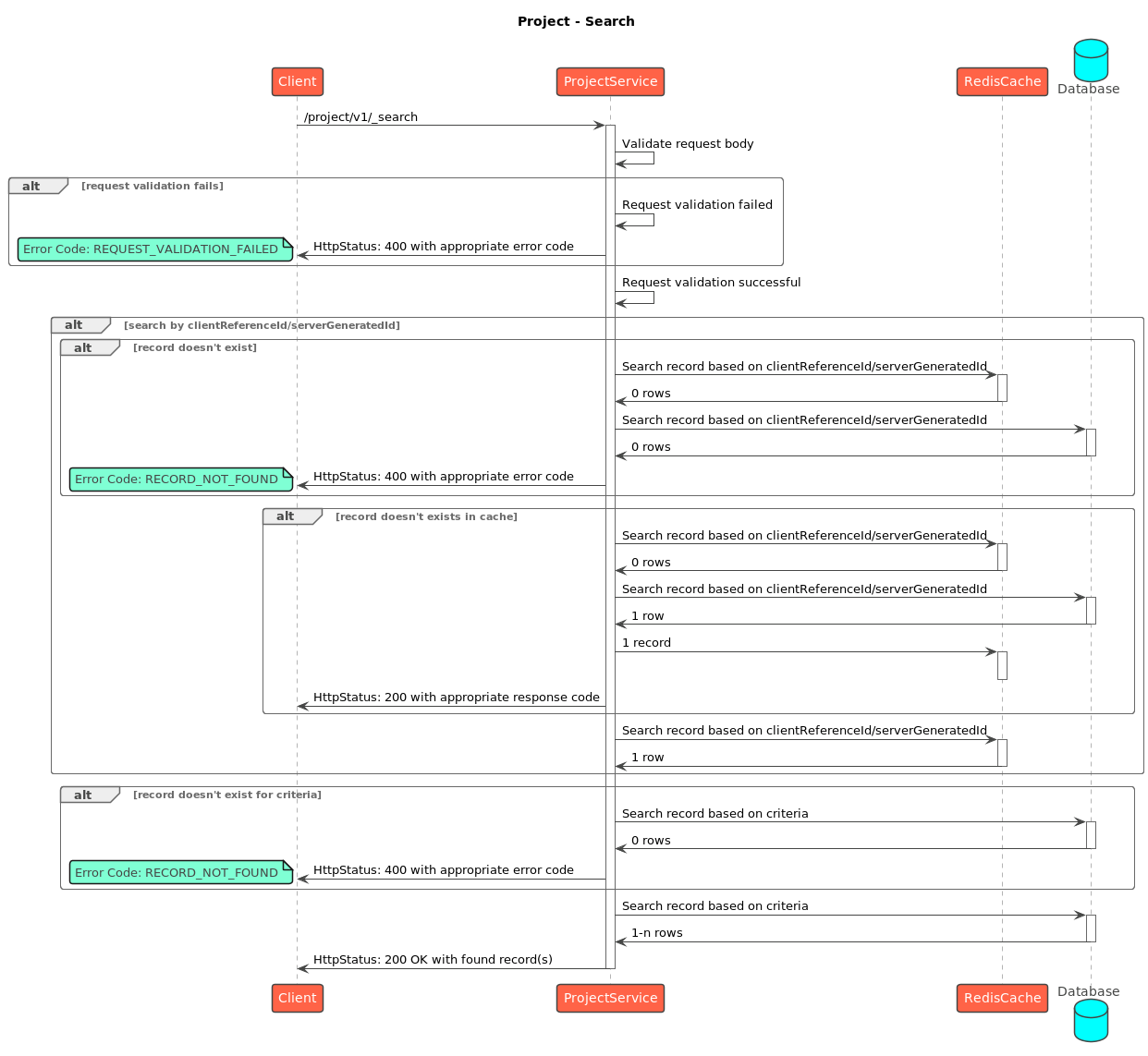
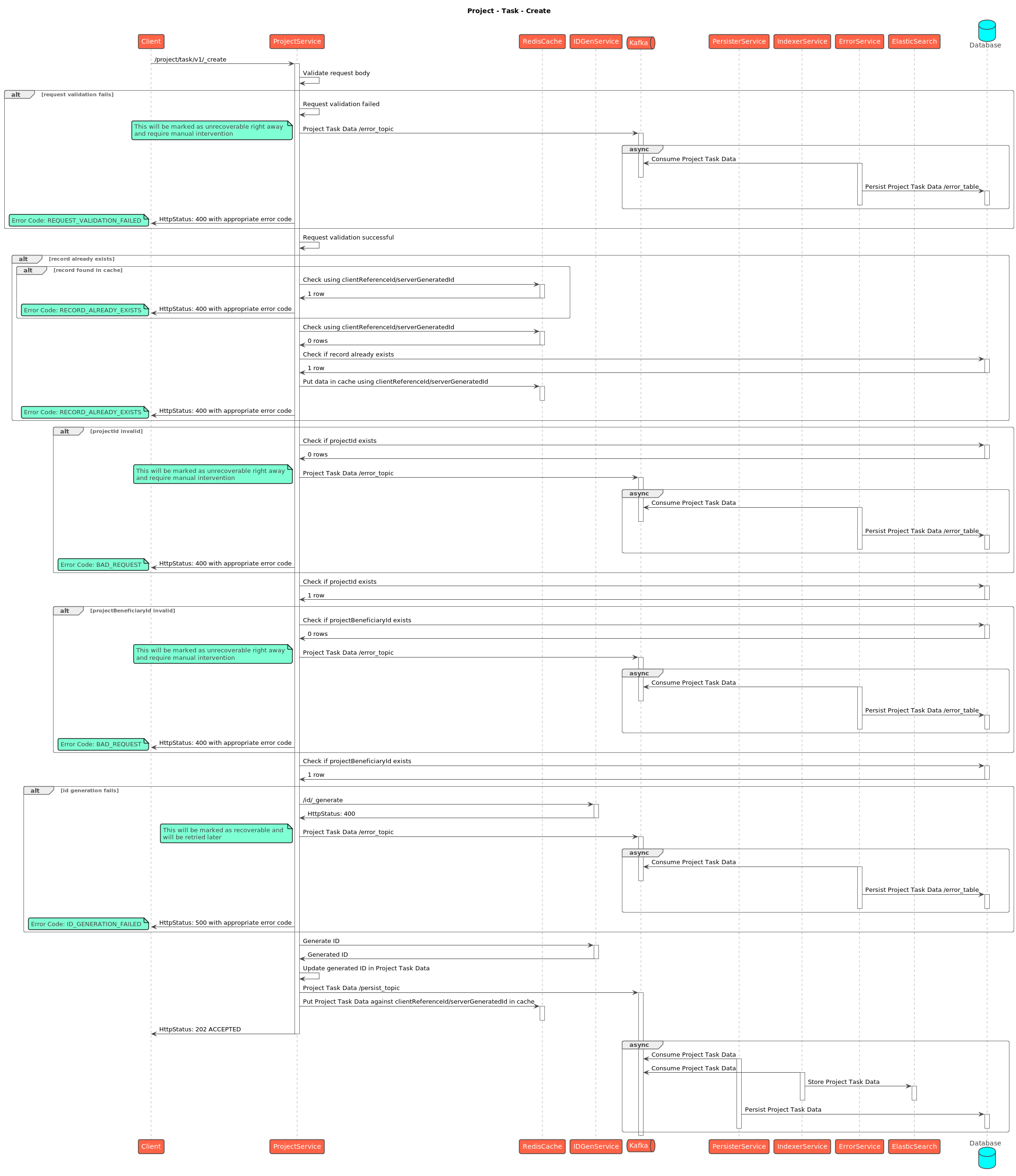
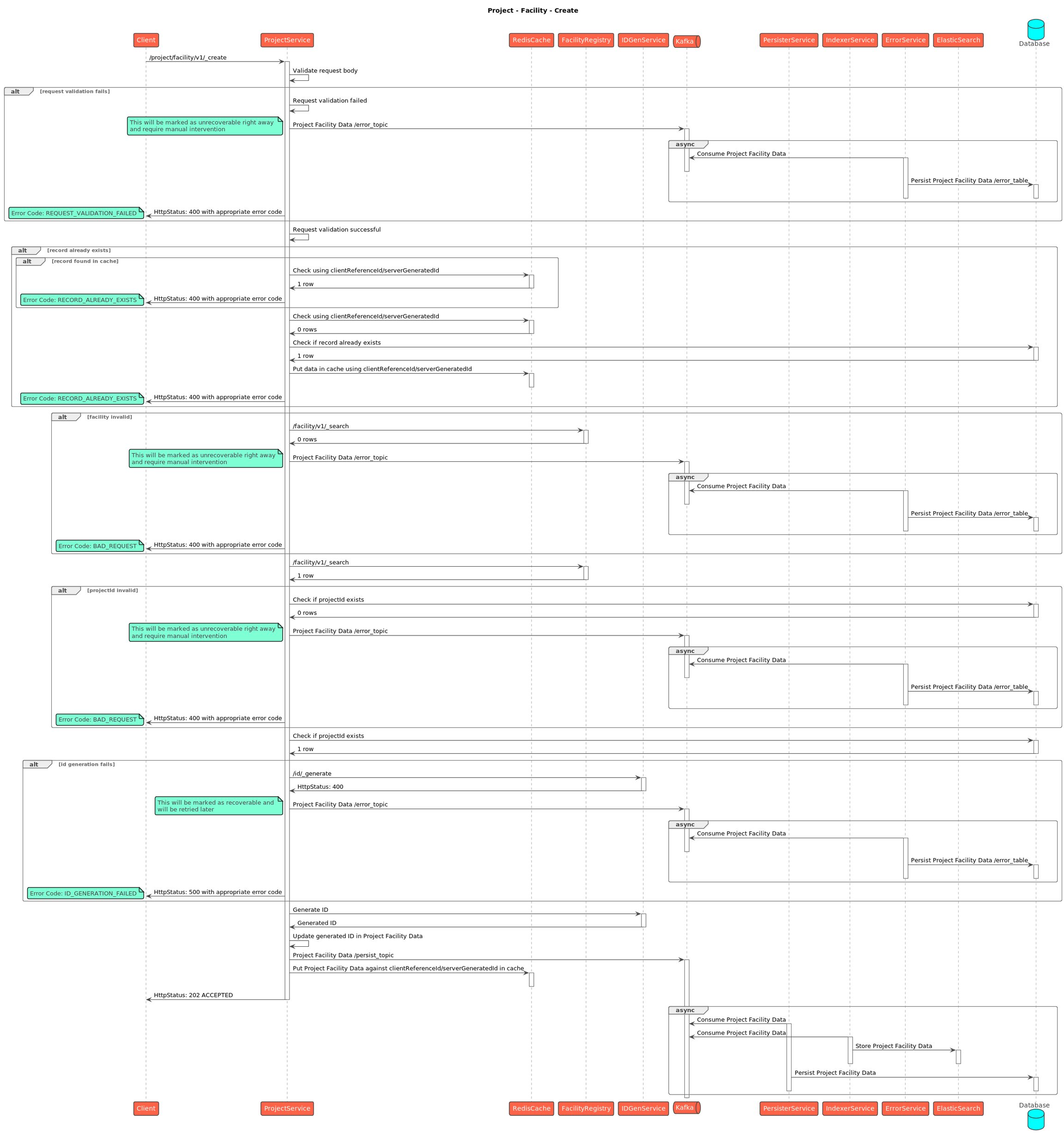
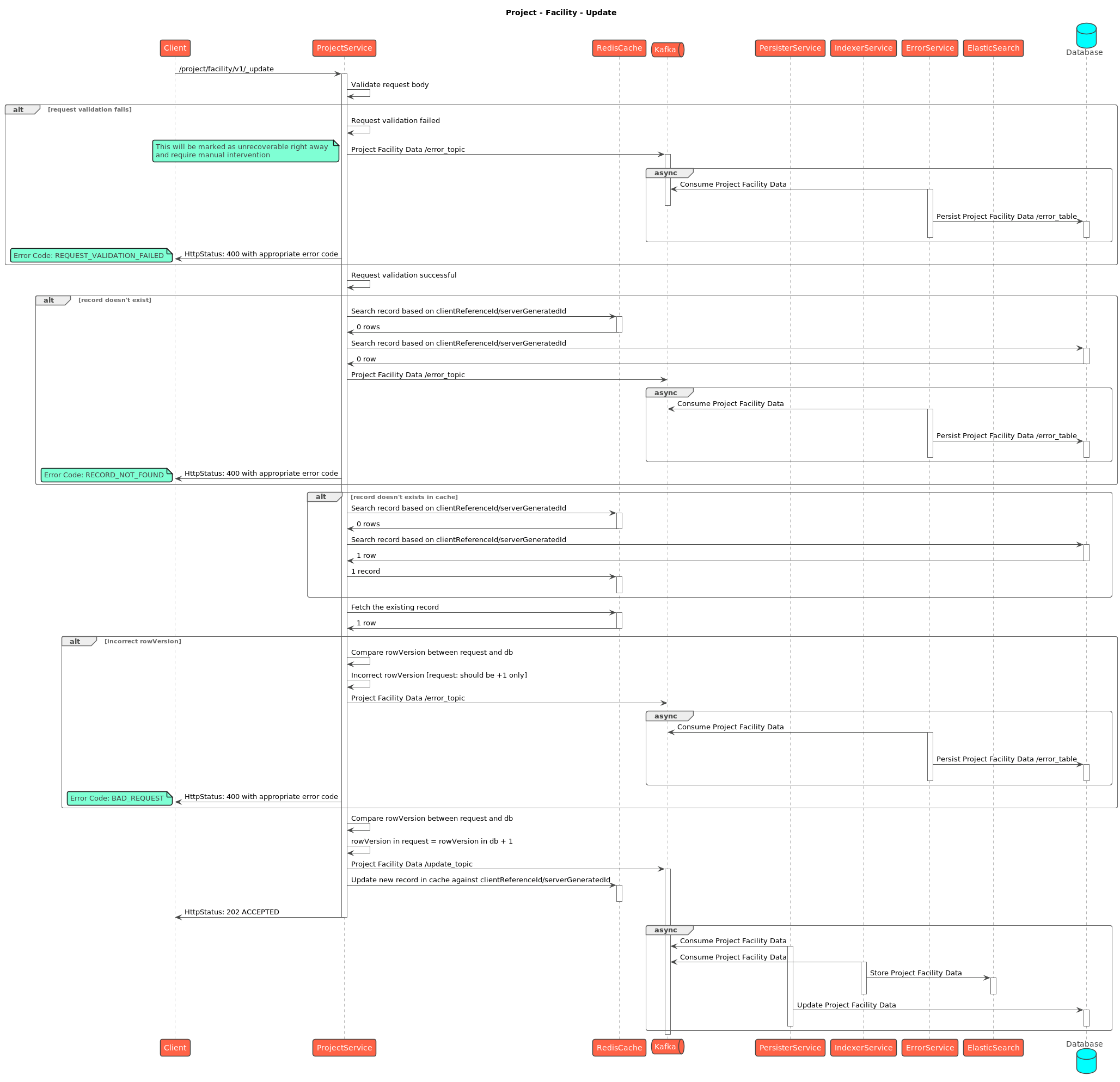
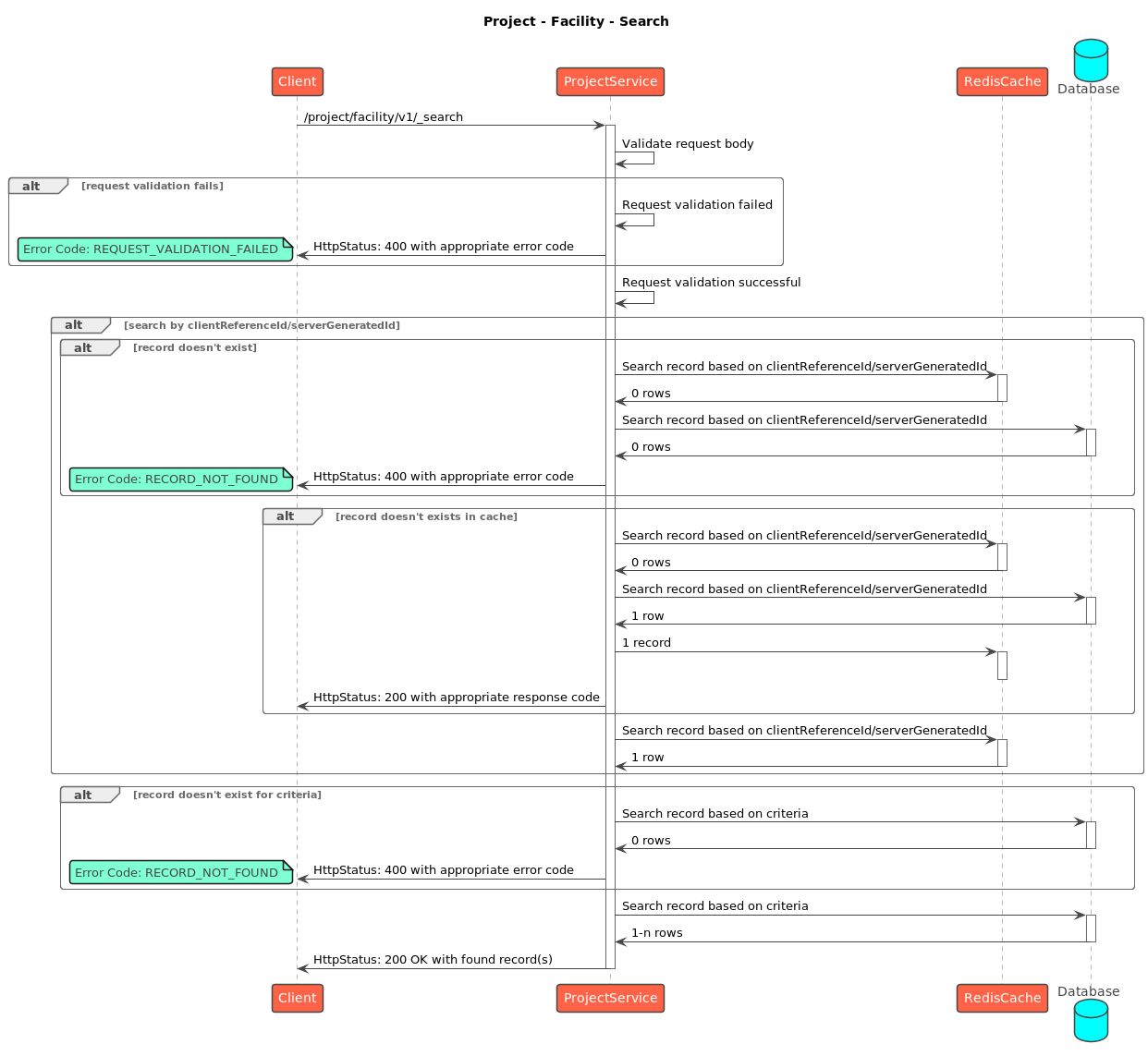
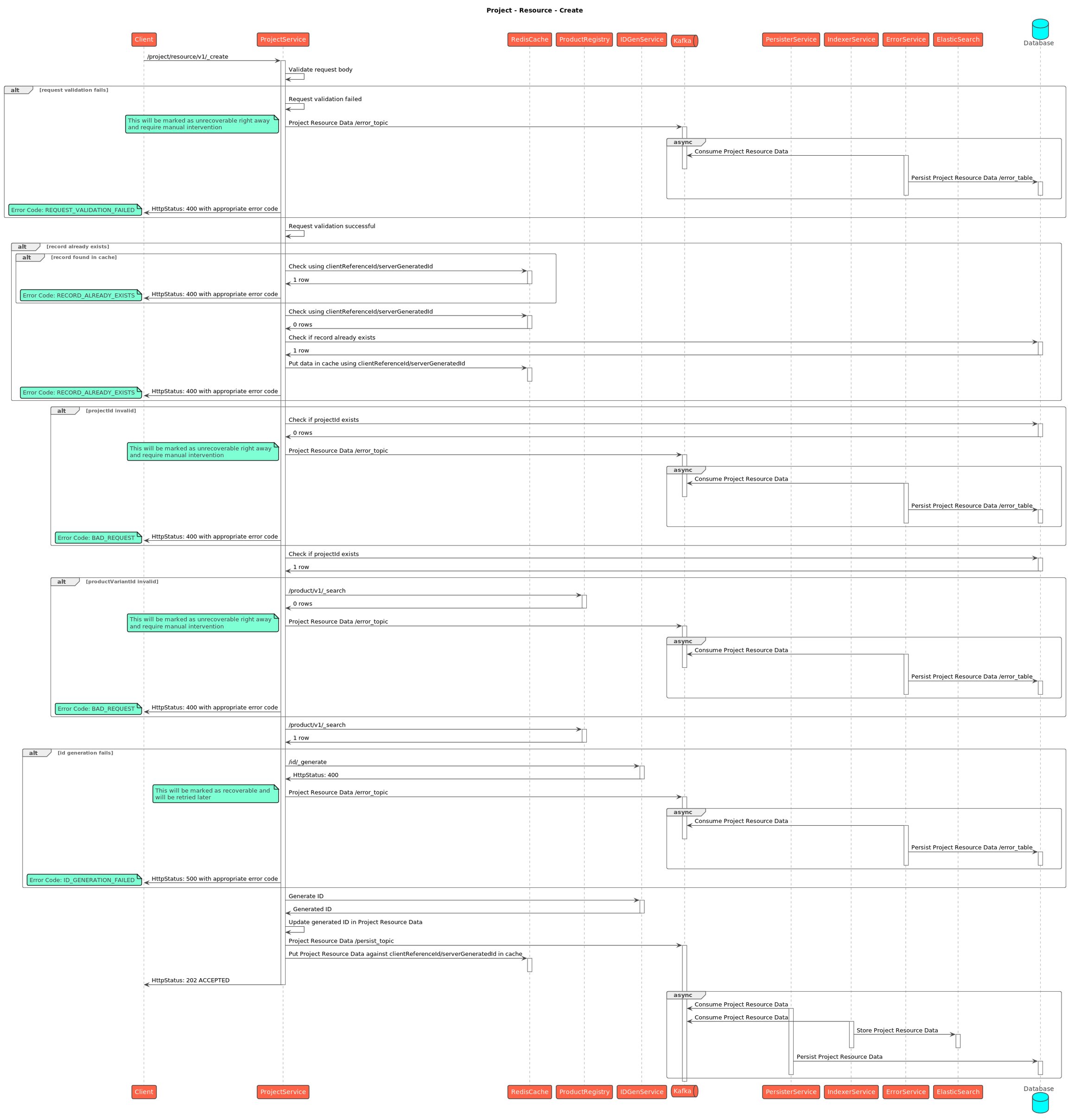


Data Model

Failure / Retry Handling
Async, no batch rollback. A bulk request returns
202before persistence. If one record in the batch fails validation in the consumer, it does not roll back the others — check consumer logs and the record's status.Idempotency is via
clientReferenceId— re-submitting the same one should not create a duplicate row.Optimistic locking via
rowVersionprotects against concurrent edits on the normal entity-update paths (task, beneficiary, etc.). (See the v2.1 note for the one place this is now relaxed — the user-action path.)Soft delete (
isDeleted) everywhere — nothing is hard-deleted; unique constraints include the delete flag.If the persister config for the project topics is missing/stale in an environment, the API will accept writes but rows will silently not appear in Postgres — a classic "it worked in QA" trap.
Known Risks / Limitations
Large surface area. Project bundles seven core entities (project, task, beneficiary, staff, facility, resource, task-resource) plus the
user_action/user_locationaudit tables. A change to shared validation or enrichment can ripple across all of them — test the whole set, not just the entity you touched.Task is the highest-volume entity. Field rounds generate huge task / task-resource volumes; search and persister throughput here drive overall campaign performance.
Cross-registry references are validated app-side. Beneficiary → household/individual and resource → product links are checked by service calls, not DB foreign keys — a stale or unreachable dependency surfaces as a validation failure, not a constraint error.
Persister/transformer config drift. Because writes are async, a missing or stale persister/transformer config in an environment lets the API accept writes that never land in Postgres or Elasticsearch.
Last updated
Was this helpful?